15 Sofa Backside Wall Design Ideas (Transform Your Space Today)


The space behind a sofa presents many design chances to make a room more appealing. People often forget about this area, but it can become a key part of any living room’s style and function.
The wall behind a sofa can be enhanced with artwork, mirrors, floating shelves, or accent lighting to create visual interest and make the room feel more complete. These design elements help transform plain walls into eye-catching features that draw attention and add depth to the space.
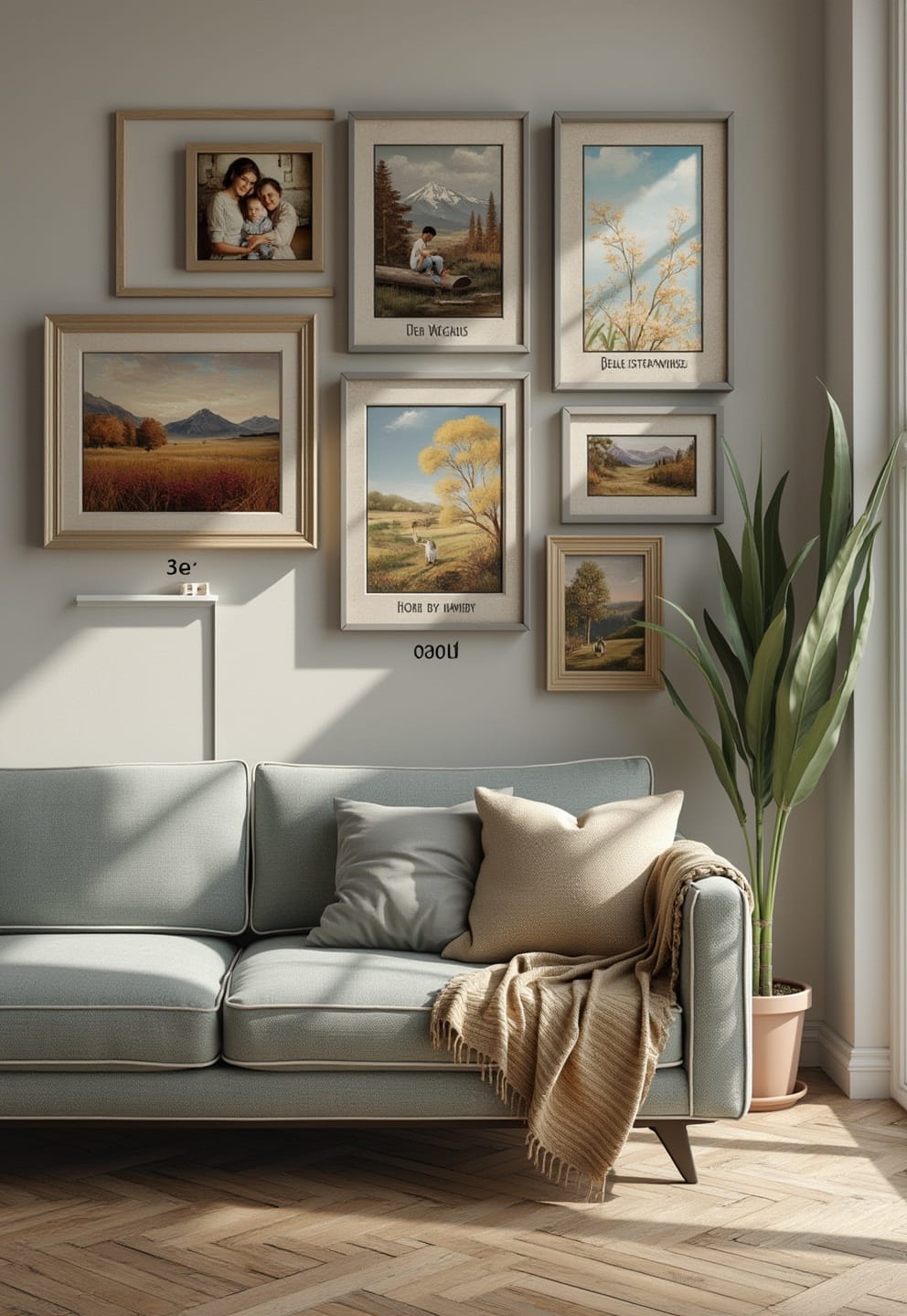
1) Framed Art Gallery
A framed art gallery transforms a sofa’s back wall into a stunning visual display. Creating a gallery wall adds personality and style to the living space while making use of empty wall space.
The key to a successful gallery wall lies in the arrangement of frames. A mix of different frame sizes and styles creates visual interest. Meanwhile, maintaining a cohesive color scheme ties the look together.
Family photos, abstract prints, and landscape artwork work well in gallery arrangements. The frames should start about 6-8 inches above the sofa and extend outward in a balanced pattern.
Proper spacing between frames helps maintain a clean, organized look. A gap of 2-3 inches between frames creates a polished appearance without looking crowded.
A gallery wall can follow symmetrical or asymmetrical layouts. Symmetrical arrangements offer a classic, formal feel, while asymmetrical designs add a more relaxed, modern touch.
Using frame-hanging tools and a level ensures proper alignment. Picture-hanging strips or hooks rated for the weight of each piece provide secure mounting.
2) Floating Shelves Display
Floating shelves create a sleek and modern look behind sofas. These wall-mounted shelves appear to float without visible brackets, adding a clean aesthetic to the space.
Installing floating shelves at varying heights adds visual interest and depth to the wall. The shelves can hold decorative items like framed photos, small plants, or artwork to personalize the area.
The spacing between shelves should be proportional to the sofa height and wall size. A common arrangement uses three shelves placed asymmetrically to create an artistic display.
Materials for floating shelves range from solid wood to metal and glass. Wood shelves bring warmth to the room, while metal or glass options suit contemporary designs.
The shelf depth matters for both safety and style. Shelves should extend 6-8 inches from the wall to display items properly without protruding too far into the living space.
Keep displays simple to avoid a cluttered look. Group items in odd numbers and vary their heights and textures for visual appeal.
Choose shelf colors that complement both the wall paint and sofa fabric. White or natural wood tones work well in most spaces and maintain a timeless appearance.
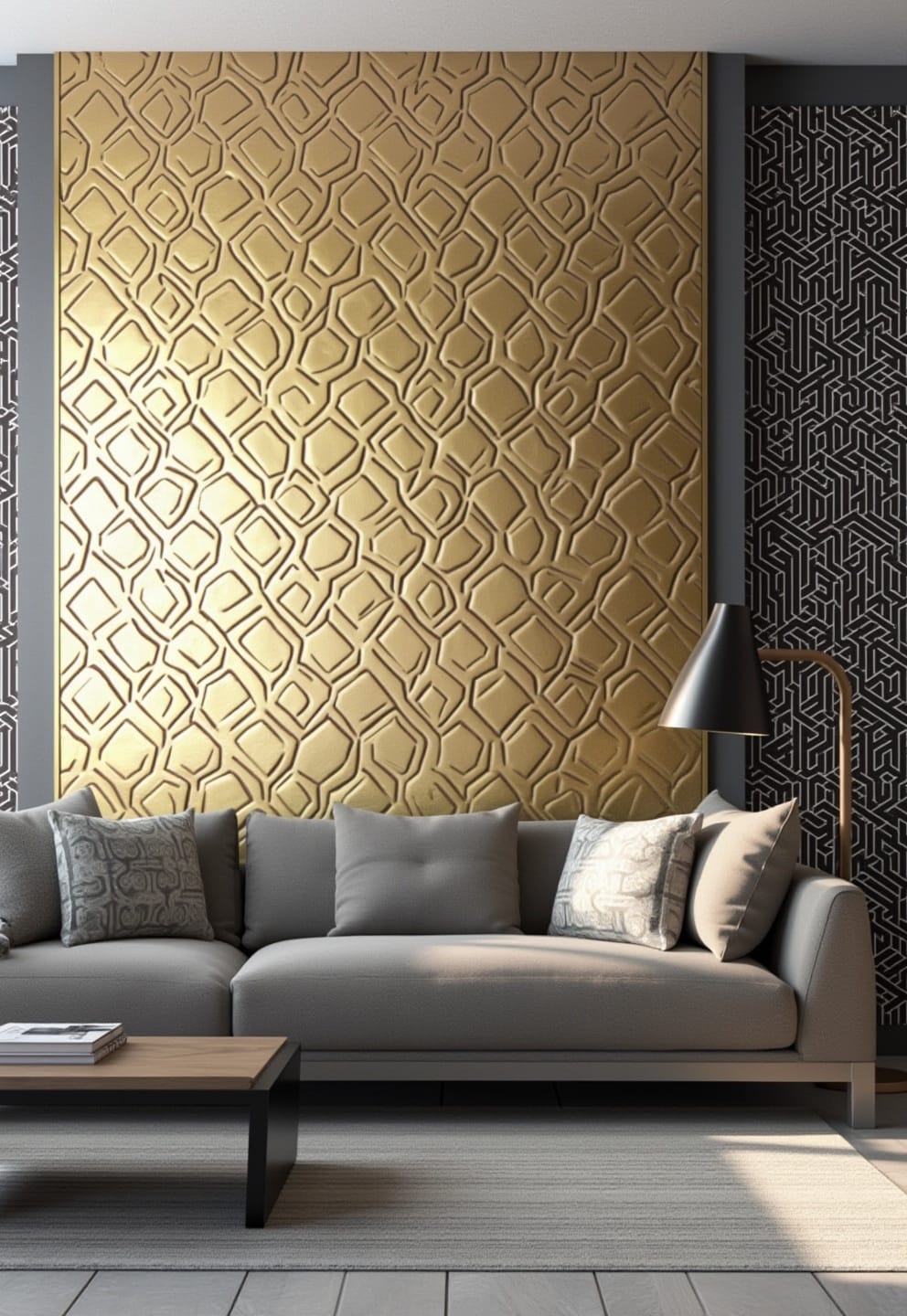
3) Geometric Wallpaper Accent
Geometric wallpaper creates a bold statement behind a sofa. The repeating patterns add visual interest and turn the wall into a focal point of the room.
Modern geometric designs range from simple shapes like hexagons and triangles to complex interlocking patterns. These wallpapers come in many color combinations to match existing room decor.
Large-scale geometric patterns work well in spacious rooms, making the sofa area feel grander. Smaller patterns suit compact spaces and create a subtle backdrop.
Metallic geometric wallpapers reflect light and add glamour to the sofa area. Gold, silver, or copper accents can make the space feel more luxurious.
Black and white geometric patterns offer a timeless look that pairs with any sofa color. The contrast creates drama without overwhelming the space.
Some people choose to apply geometric wallpaper only to the section of wall directly behind the sofa. This targeted approach creates an accent area that frames the furniture.
The wallpaper’s pattern should complement the sofa’s style. Clean lines match modern furniture, while softer geometrics suit traditional pieces.
4) Vintage Mirror Hanging
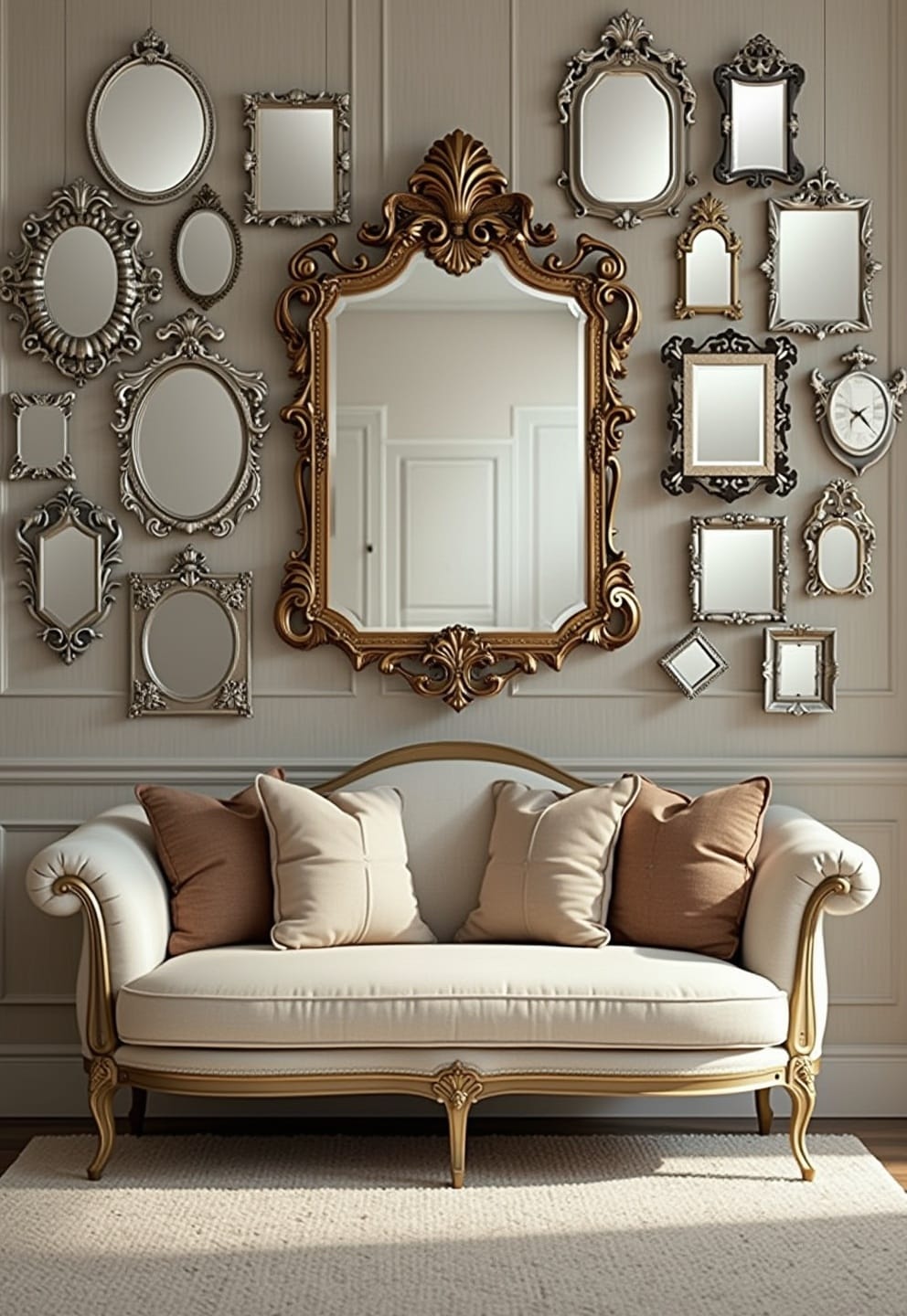
Vintage mirrors add elegance and depth to the space behind a sofa. They create an illusion of more space while reflecting natural light throughout the room.
A single large vintage mirror makes a bold statement when centered above the sofa. The mirror’s frame should be approximately two-thirds the width of the sofa for proper proportions.
Grouping smaller vintage mirrors in asymmetrical arrangements brings visual interest to the wall. Mixing different frame styles and sizes while maintaining a cohesive color scheme creates an artful display.
When hanging vintage mirrors, secure mounting hardware rated for the mirror’s weight is essential. Heavy mirrors need wall anchors or must be mounted directly into wall studs for safety.
The bottom edge of the mirror should hang 6-8 inches above the sofa’s back. This spacing creates a visual connection between the furniture and wall decor while maintaining comfortable seating.
Vintage mirrors with ornate gold or silver frames complement both traditional and modern sofa styles. The patina and wear on authentic vintage frames add character to the room’s design.
5) Indoor Vertical Garden
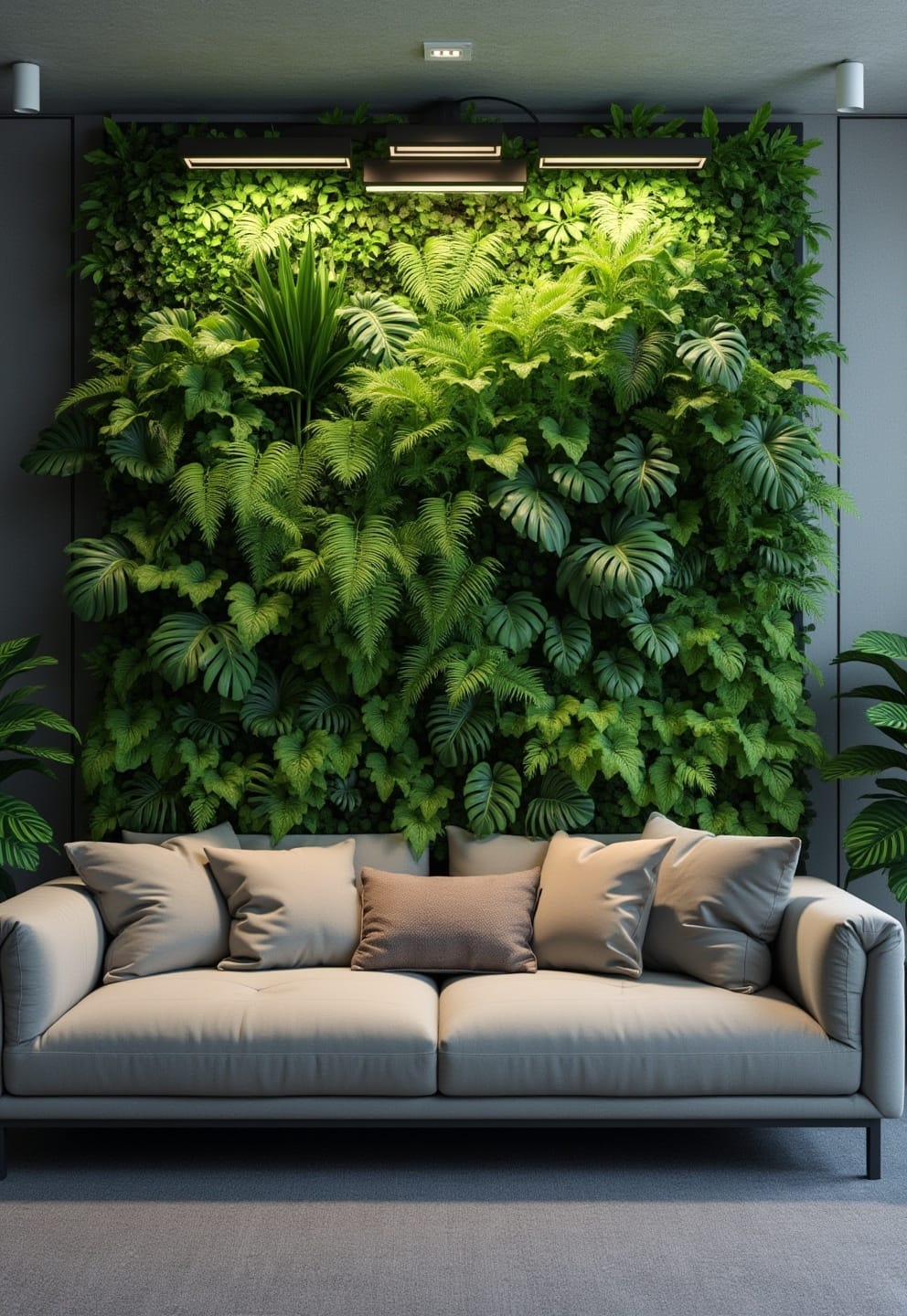
A living wall behind the sofa adds natural beauty and freshness to any room. Plants mounted on the wall create a stunning focal point while improving air quality.
Vertical gardens come in various styles, from simple pocket planters to complex modular systems. Some popular plants for indoor vertical gardens include pothos, ferns, and philodendrons.
The installation process requires secure mounting brackets and proper waterproofing to protect the wall. Built-in irrigation systems help maintain the plants with minimal effort.
Low-maintenance options include artificial vertical gardens that mimic real plants. These require no watering or maintenance while still providing a green aesthetic.
Lighting is essential for plant health in vertical gardens. Installing grow lights ensures plants thrive even in rooms with limited natural light.
The size of the vertical garden can be customized to fit the sofa wall space. Small arrangements work well for compact areas, while larger installations create dramatic impact.
Regular pruning keeps the garden looking neat and prevents overgrowth onto the sofa. Monthly maintenance checks help spot any potential issues early.
6) Sconce Lighting Arrangement
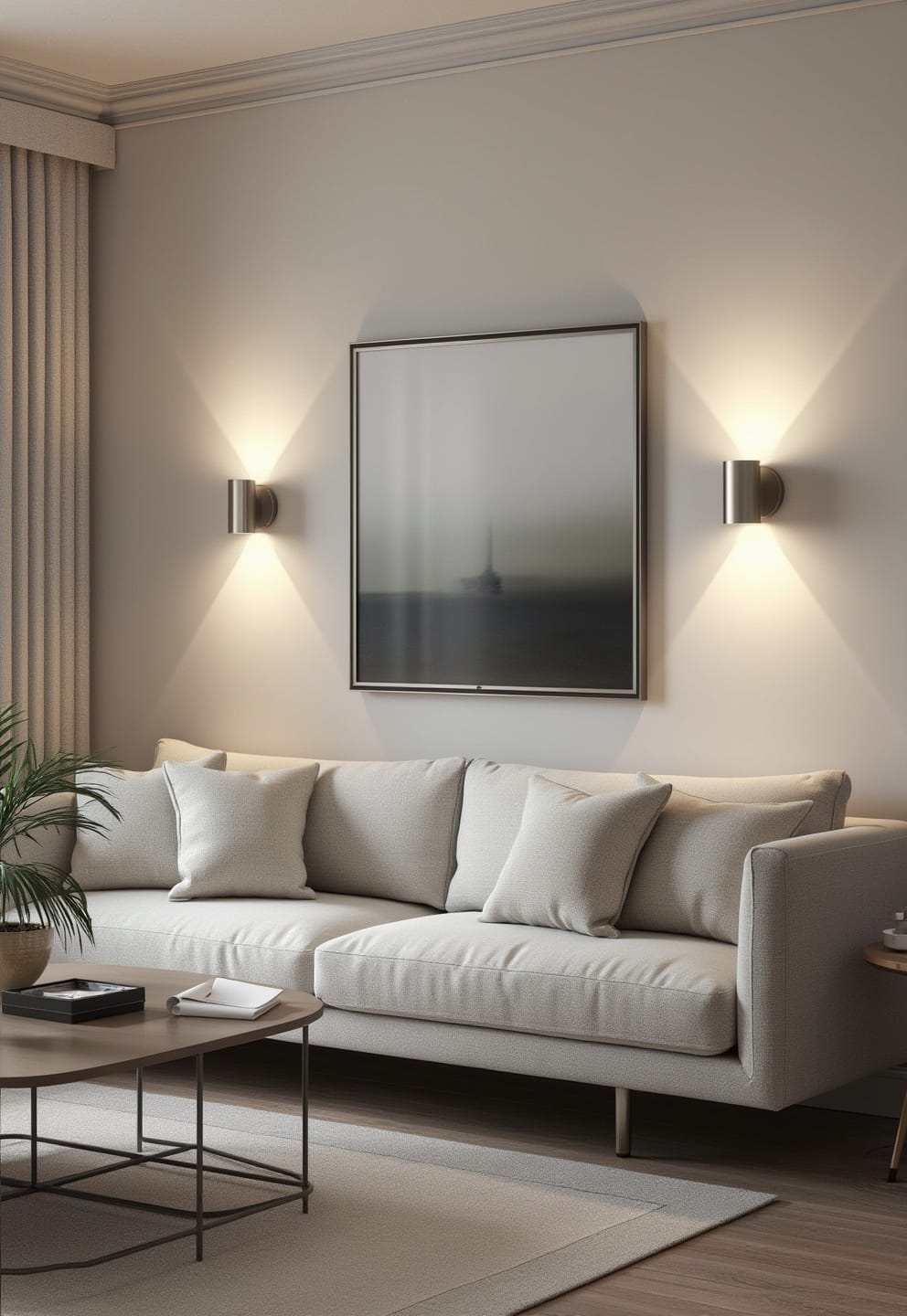
Wall sconces add style and functionality to the space behind a sofa. These light fixtures create a warm, welcoming atmosphere while providing task lighting for reading or other activities.
The ideal height for sconce placement is 60-66 inches from the floor. This measurement ensures the light hits at eye level when seated on the sofa.
Spacing between sconces depends on the sofa’s length. A good rule is to place them 6-8 feet apart, with equal distance from the sofa’s ends. For a standard three-seat sofa, two sconces often work best.
Light direction matters when choosing sconce styles. Up-lights create ambient lighting and highlight wall textures. Meanwhile, down-lights work well for reading and focused illumination.
The sconce size should match the sofa wall’s scale. A general guide is to select fixtures that are about 1/4 the height of the wall space above the sofa.
Dimmer switches let people adjust light levels throughout the day. This feature helps create different moods and saves energy when full brightness isn’t needed.
Choose sconce finishes that complement existing room hardware and decor. Popular options include brushed nickel, bronze, and matte black.
7) Mounted Bookshelves
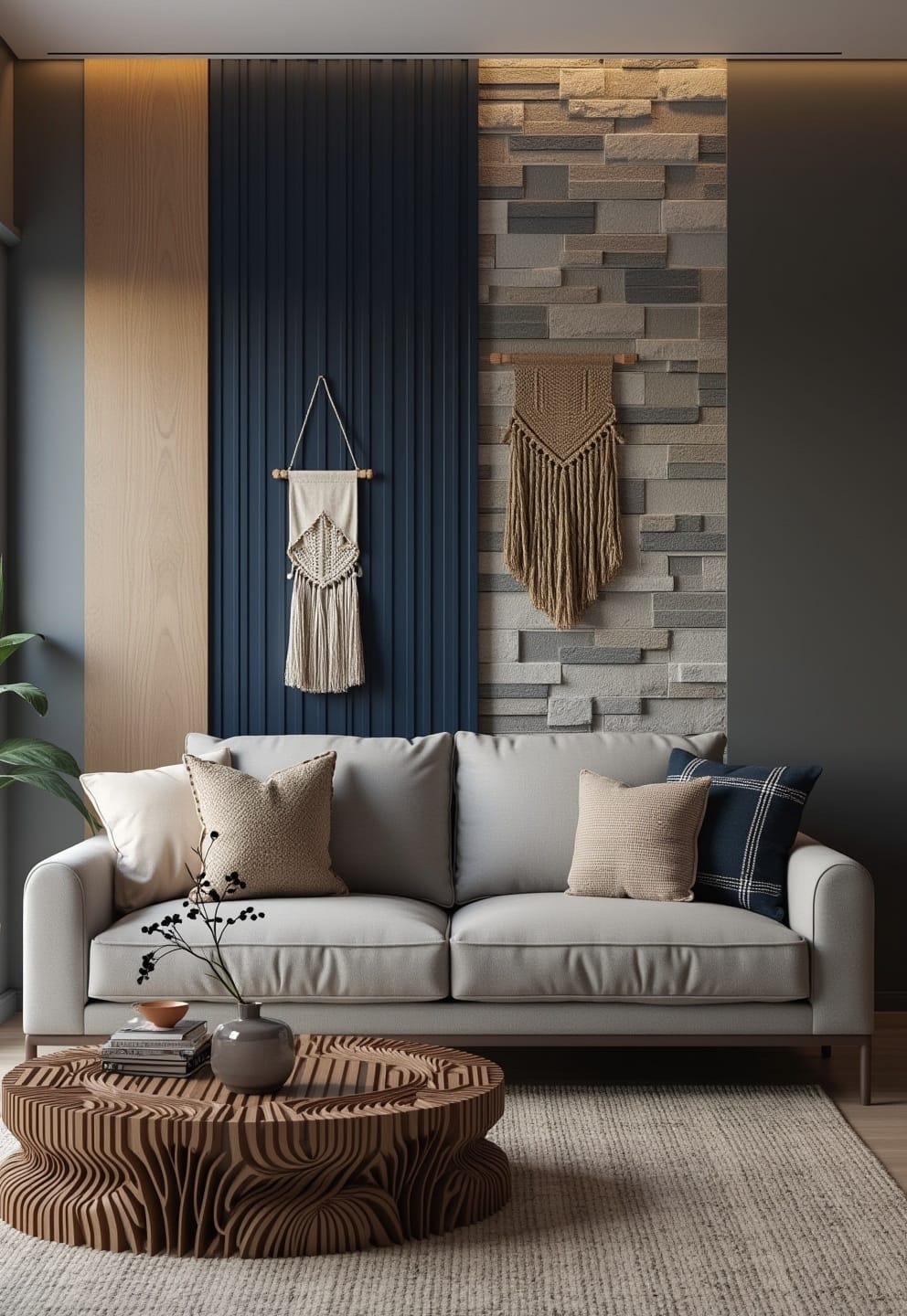
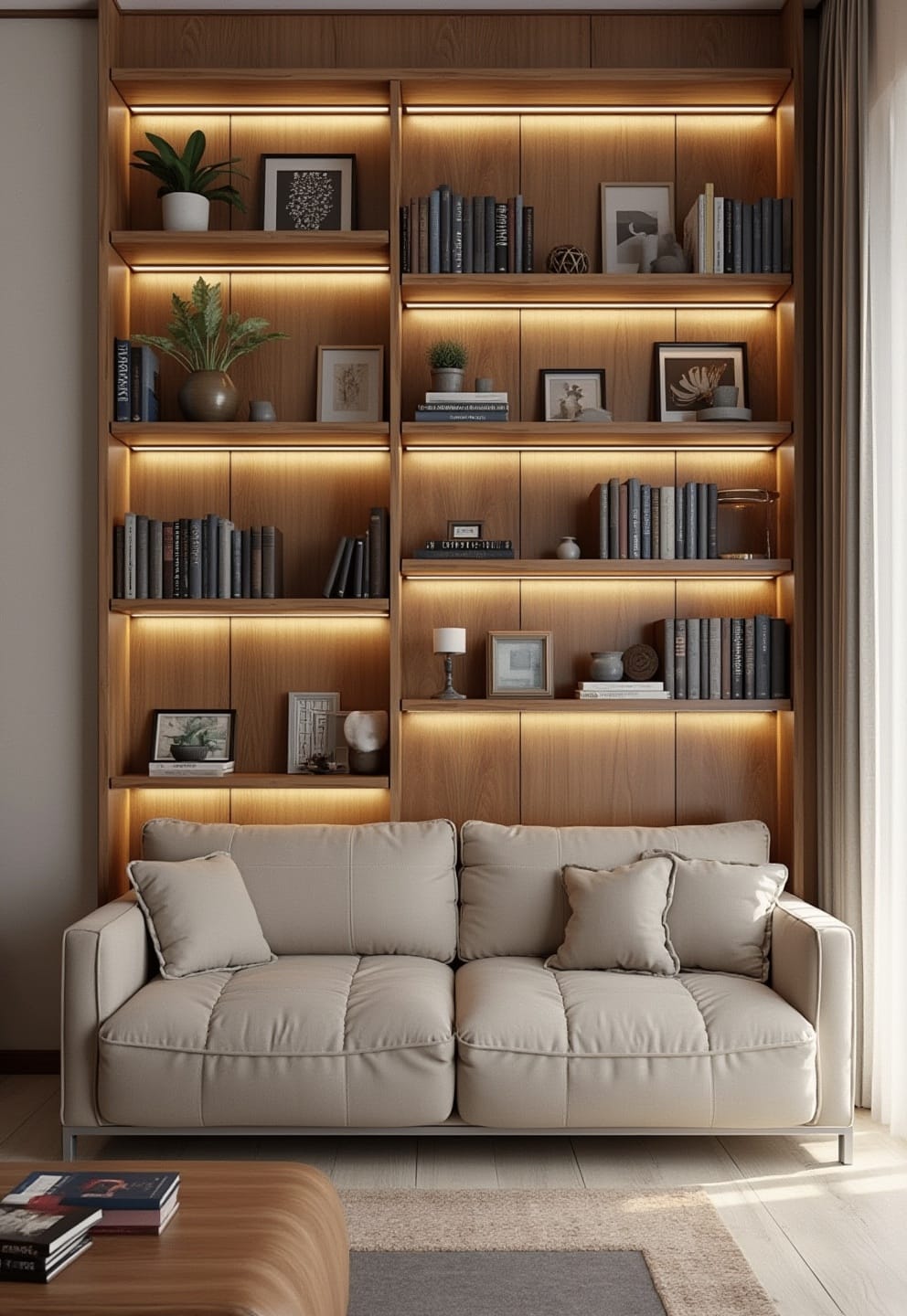
Wall-mounted bookshelves behind a sofa create a striking focal point while maximizing storage space. These shelves transform empty wall space into a functional display area for books, photos, and decorative items.
Floating shelves offer a modern, minimalist look that works well in contemporary spaces. The clean lines and hidden brackets keep the design sleek and uncluttered.
Traditional bracket-mounted shelves provide extra stability for heavier items. These shelves come in various materials like wood, metal, or glass to match existing room decor.
The height of mounted shelves should start at least 12 inches above the sofa’s backrest. This spacing prevents people from bumping their heads while ensuring the shelves remain accessible.
Arranging items on the shelves requires balance and thought. Books can be organized by size or color, while decorative objects add visual interest between book groupings.
LED strip lighting under the shelves adds warmth and ambiance to the space. The soft glow highlights displayed items and provides gentle accent lighting in the evening.
Consider the wall’s structure and use appropriate anchors when installing mounted shelves. Professional installation may be needed for heavy-duty shelving systems.
Color Schemes And Textures
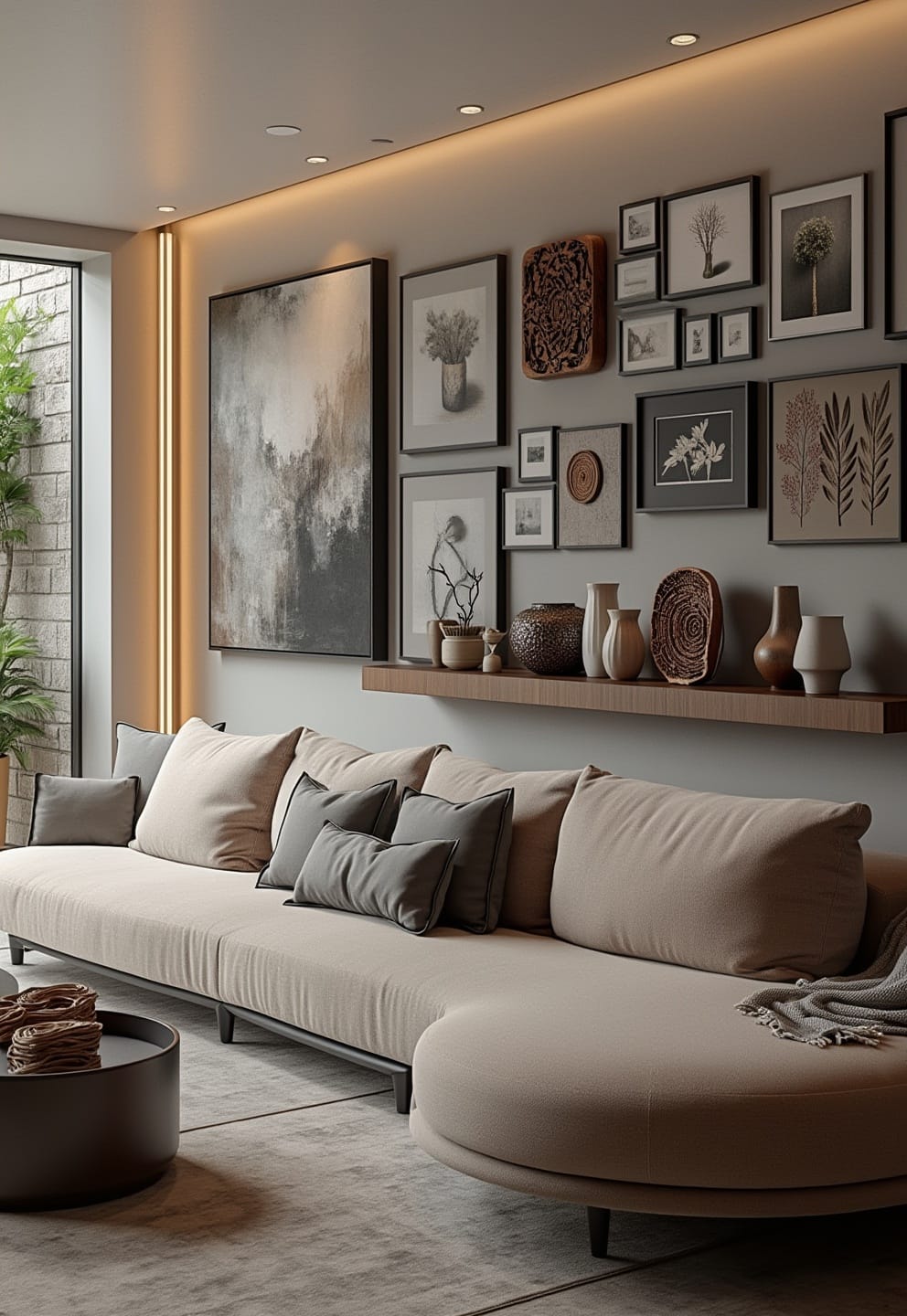
The space behind your sofa creates a prime opportunity to establish visual harmony through thoughtful color choices and engaging textures. Proper selection of these elements transforms a basic wall into a striking design feature.
Choosing the Right Colors
Paint colors for the sofa backside wall should complement both the sofa fabric and the room’s existing color palette. Neutral tones like warm grays, soft beiges, and muted earth tones provide versatility and timeless appeal.
Bold accent colors can create visual interest when used strategically. A deep navy or forest green wall behind a light-colored sofa adds depth and sophistication.
Consider the 60-30-10 rule for color distribution:
- 60% dominant color (wall)
- 30% secondary color (sofa)
- 10% accent color (accessories)
Incorporating Textures Effectively
Textural elements add depth and visual interest to the wall space. Wallpaper with subtle patterns or grasscloth finishes creates an elegant backdrop without overwhelming the space.
Wall panels with geometric patterns or natural wood slats introduce architectural interest while maintaining clean lines. These elements work well with both modern and traditional sofa styles.
Popular texture options include:
- Textured wallpaper
- Wood paneling
- Stone veneer
- Fabric wall coverings
- 3D wall panels
Mix smooth and rough textures to create contrast. A sleek painted wall can pair beautifully with textured artwork or woven wall hangings.
Art And Decor Options

Strategic wall art and decorative elements transform the space behind a sofa into a striking visual centerpiece. The right mix of artwork and sculptural pieces creates depth and visual interest while complementing the room’s style.
Utilizing Wall Art Creatively
Large-scale canvas prints or framed photographs make bold statements above sofas. A single oversized piece should measure about two-thirds the width of the sofa for proper proportion.
Gallery walls offer flexibility to mix different frame sizes and styles. Arrange 5-7 pieces in an asymmetrical pattern, keeping the bottom edge 6-8 inches above the sofa back.
Popular wall art options include:
- Abstract paintings
- Black and white photography
- Botanical prints
- Vintage posters
- Mirror collections
Sculptures and Installations
Three-dimensional art adds unexpected texture to sofa wall spaces. Wall-mounted metal sculptures or ceramic installations create dynamic focal points.
Floating shelves display smaller sculptural pieces at varying heights. Group items in odd numbers and vary their sizes for visual balance.
Light installations like neon art or LED wall sculptures provide ambient lighting while doubling as statement pieces. Mount them 12-15 inches above the sofa to prevent glare.
Material options for wall sculptures:
- Carved wood
- Woven fiber art
- Metal wall hangings
- Glass installations
- Macramé pieces