7 Soft Minimalist Bedroom Ideas (Transform Your Space Today)


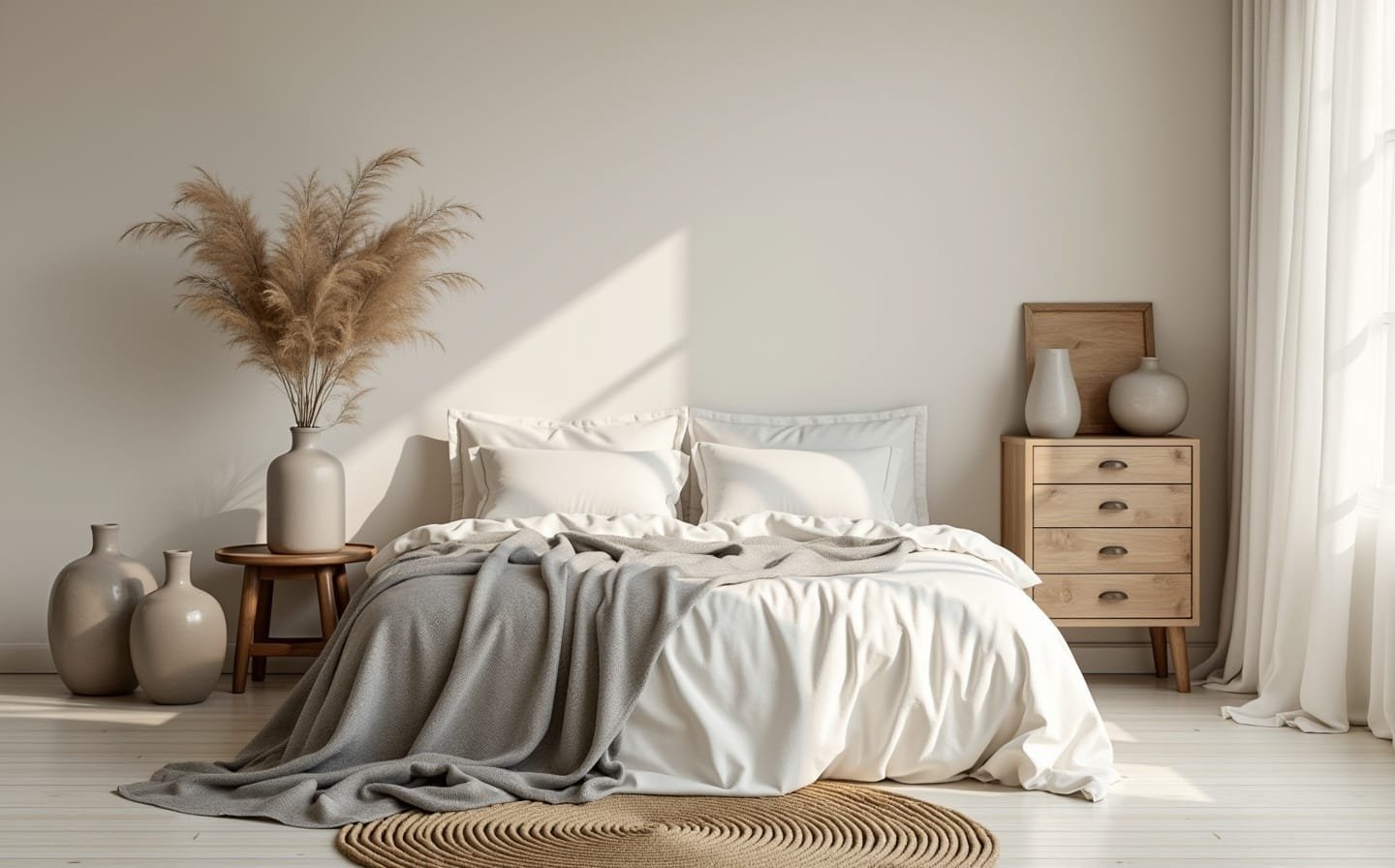
A soft minimalist bedroom creates a peaceful retreat that combines simplicity with comfort. The style focuses on clean lines and thoughtful design choices. It also keeps a welcoming atmosphere through soft textures and gentle colors.
Creating a soft minimalist bedroom doesn’t require getting rid of everything. It’s about choosing items that serve a purpose while adding subtle warmth to the space. The style draws from traditional minimalism but adds layers of coziness through carefully selected fabrics, lighting, and natural elements.
1) Neutral Color Palette
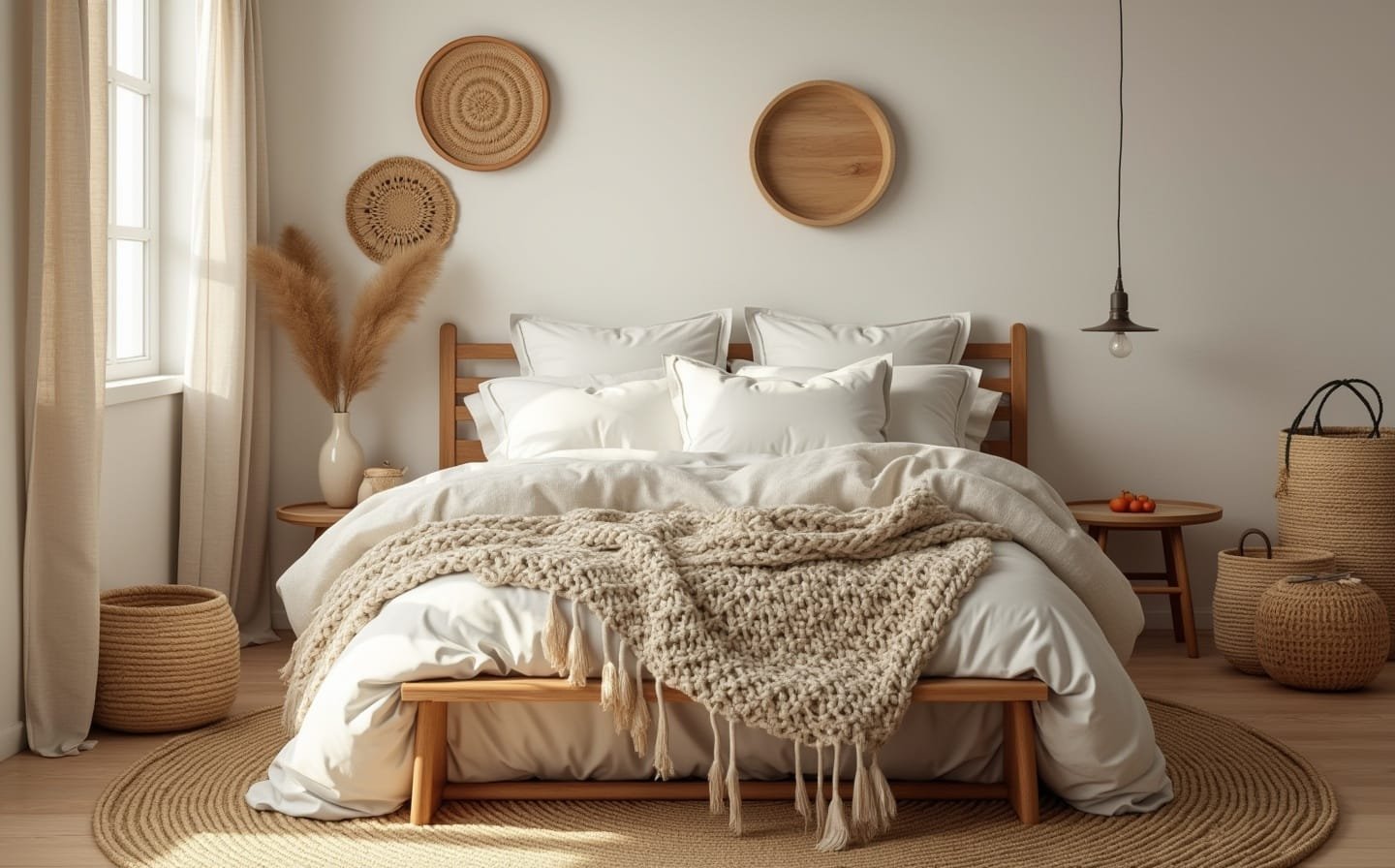
A soft minimalist bedroom starts with a neutral color palette. Whites, beiges, greys, and soft browns create a peaceful foundation for the space.
Light cream walls pair beautifully with white bedding and natural wood furniture. These colors work together to make the room feel open and airy.
Neutral colors help reduce visual clutter and promote relaxation. Adding different shades of the same color creates depth without overwhelming the senses.
Textural elements in neutral tones add interest while maintaining simplicity. A grey wool throw blanket or cream linen pillowcases bring warmth to the space.
Paint colors like dove grey, warm white, or soft taupe work well for walls. These shades create a gentle backdrop that promotes rest and tranquility.
Natural materials in neutral colors strengthen the minimalist aesthetic. Stone-colored ceramic vases, tan jute rugs, and white cotton curtains blend seamlessly together.
2) Natural Textures
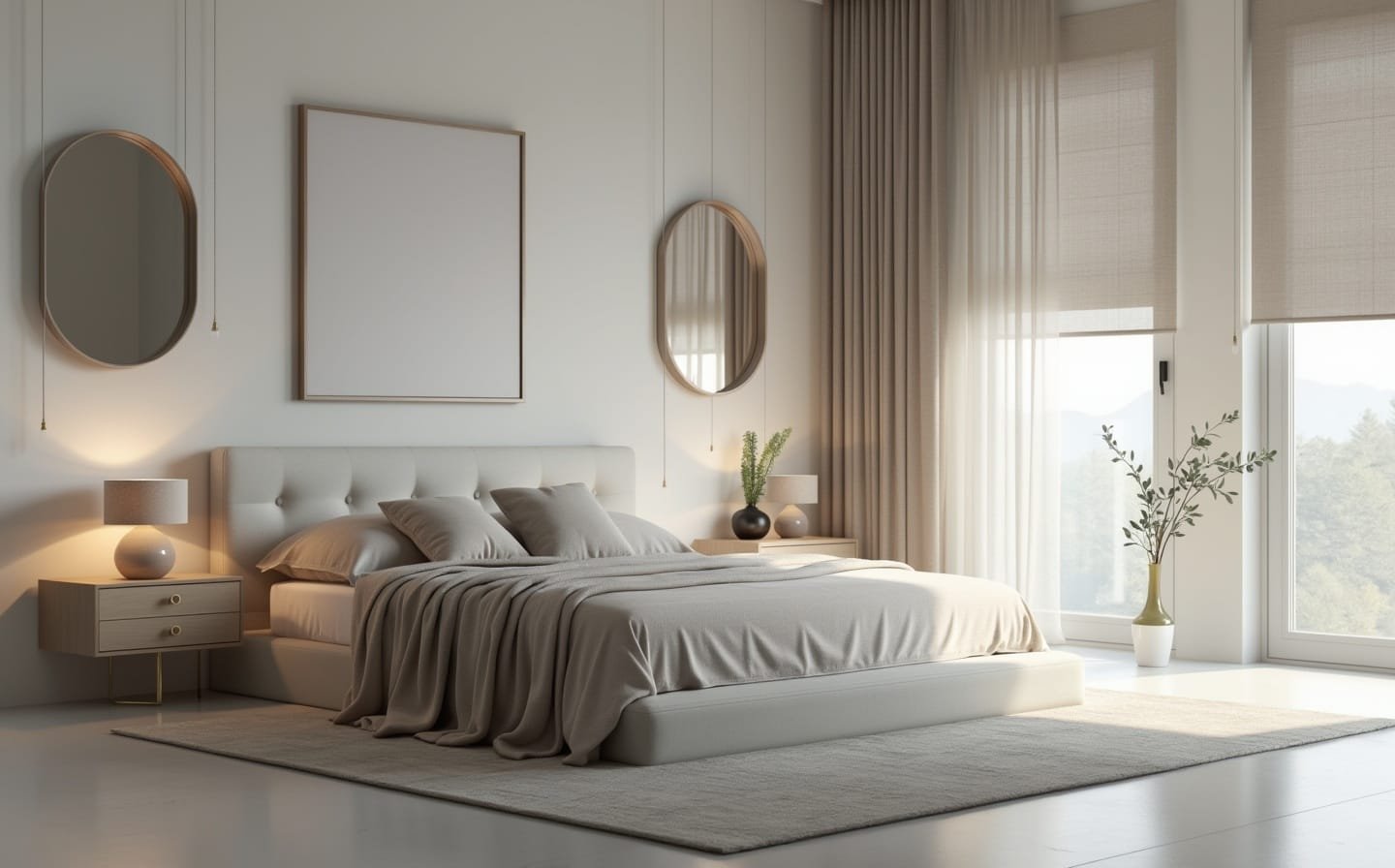
Natural materials bring warmth and comfort to a soft minimalist bedroom. Materials like cotton, linen, and wool create layers of softness without adding visual clutter.
Woven baskets and wooden furniture add organic texture while maintaining clean lines. These elements connect the space to nature and create a calming atmosphere.
Cotton bedding in neutral shades forms the foundation of the bedroom’s textural elements. Adding a chunky knit throw or a soft wool rug introduces varied textures without overwhelming the space.
Natural fiber curtains like linen or hemp filter light beautifully while adding subtle texture to windows. These materials move gently with air flow and create a peaceful environment.
Jute or sisal rugs ground the space with their rough-yet-natural feel. They work well under smoother textiles like cotton or wool rugs.
Small touches like a wooden tray, ceramic vase, or woven wall hanging add thoughtful texture. These pieces bring interest to the room while keeping the minimalist spirit intact.
3) Clean Lines
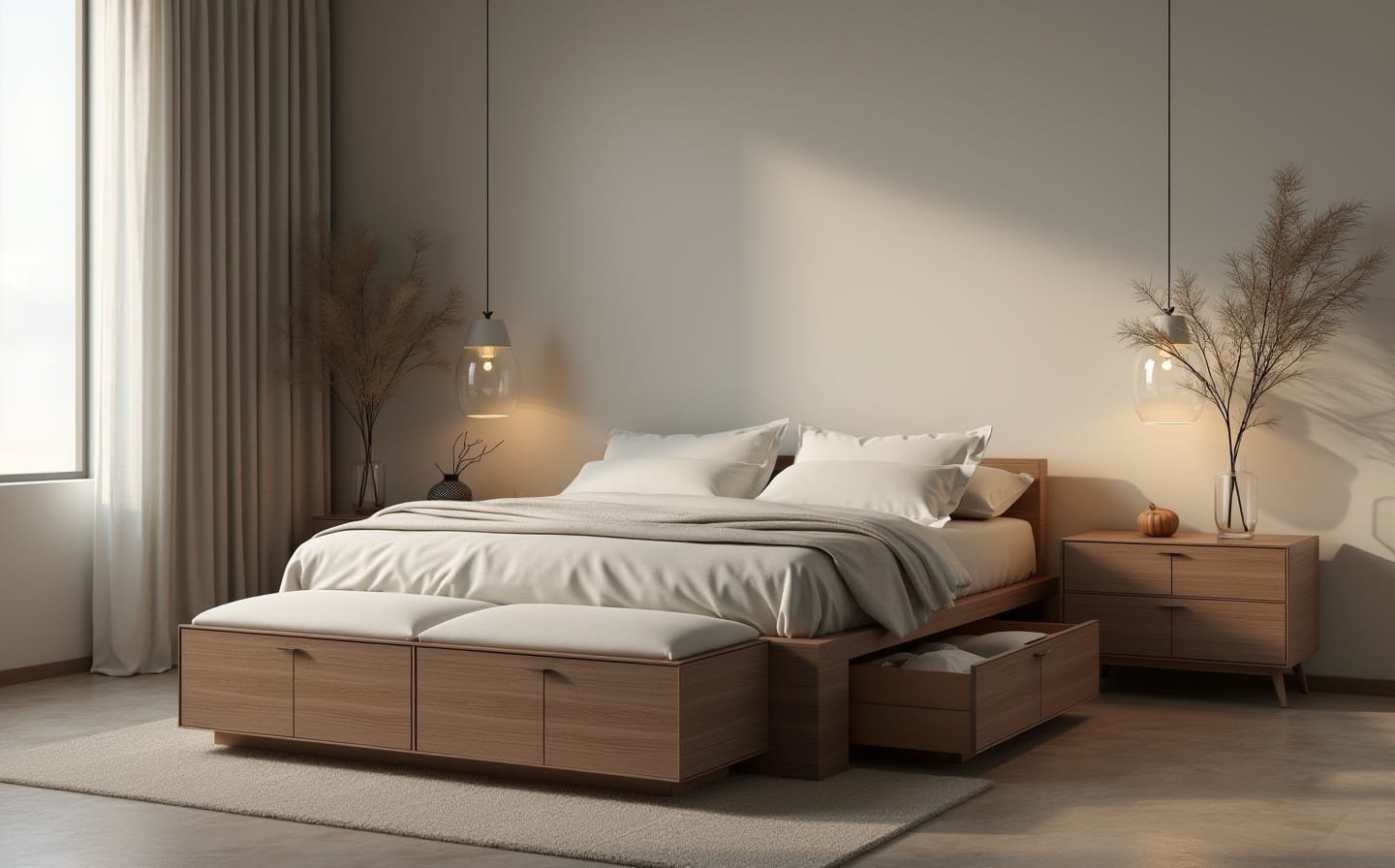
Clean lines form the foundation of soft minimalist bedrooms. Simple, straight edges and smooth surfaces create a sense of order and tranquility throughout the space.
Furniture with straight edges and minimal ornamentation works best in these rooms. A platform bed with a plain headboard and basic nightstands keeps the look sleek without feeling harsh.
Wall decor follows the same principle. Simple floating shelves, unframed mirrors, and art pieces with geometric shapes maintain visual harmony while adding interest to the space.
Window treatments should be simple and functional. Roller blinds or plain curtain panels hung from straight rods complement the clean aesthetic without adding visual clutter.
Storage solutions need clean silhouettes too. Built-in closets with flush doors or dressers with minimal hardware keep the room looking organized and intentional.
Soft textures like cotton, linen, and wool balance the straight lines. These materials add warmth while maintaining the room’s refined appearance through their simple weaves and patterns.
4) Functional Furniture
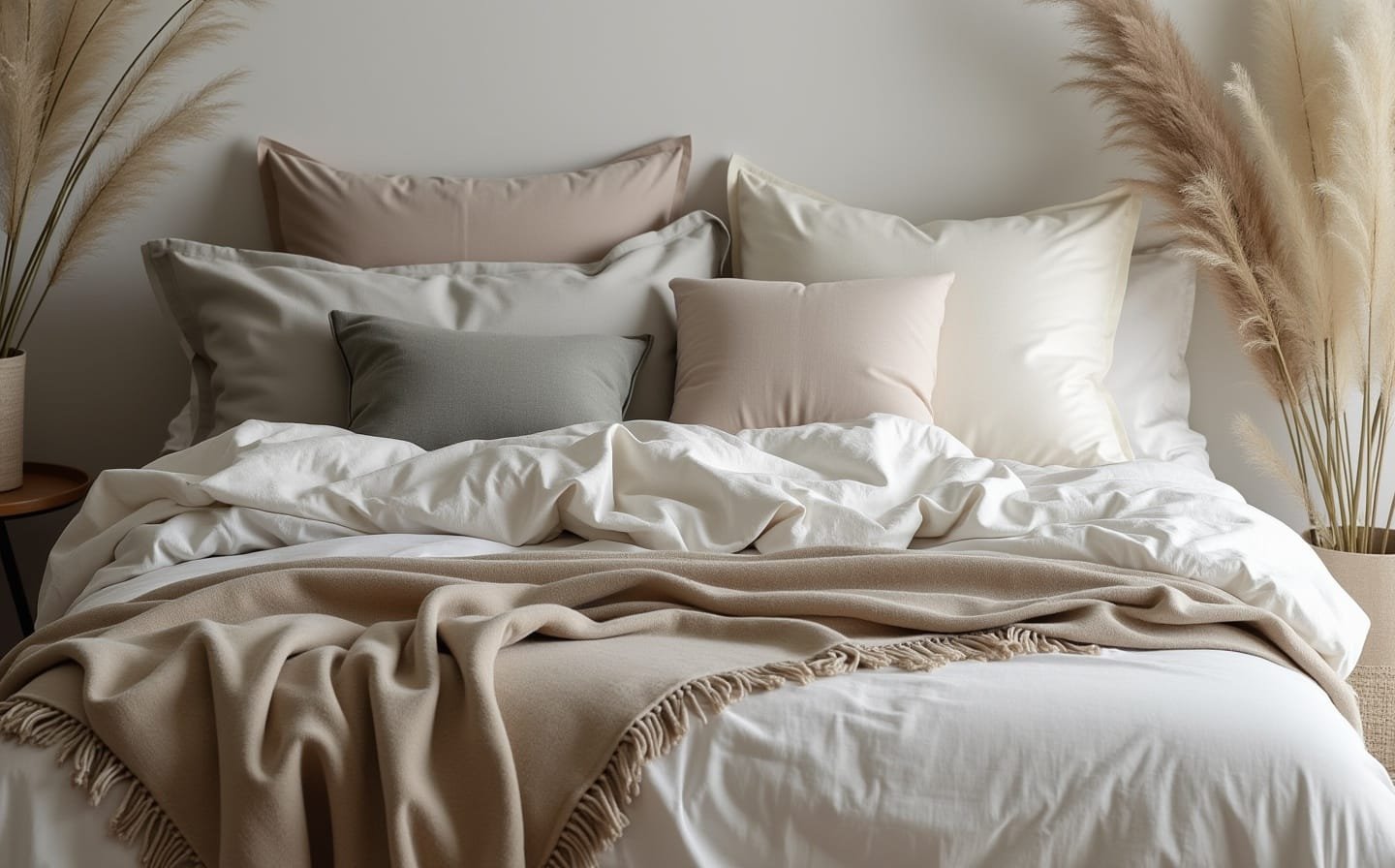
Minimalist bedrooms need furniture that serves a clear purpose. Each piece should combine style with practicality to maintain a clutter-free space.
A bed frame with built-in storage drawers helps keep extra linens and seasonal items out of sight. Platform beds work well in soft minimalist spaces because they eliminate the need for a box spring.
A simple nightstand with one or two drawers provides enough space for essentials while maintaining clean lines. Wall-mounted floating nightstands save floor space and create an airy feel.
Choose a dresser that fits the room’s scale. A tall, narrow dresser works well in smaller spaces, while wider dressers suit larger rooms. Look for pieces with smooth surfaces and minimal hardware.
Multi-purpose furniture adds value without taking up extra space. A bench at the foot of the bed can store items inside while offering a place to sit.
Avoid furniture with ornate details or excessive decoration. Clean lines and simple shapes help maintain the soft minimalist aesthetic while keeping the room functional.
5) Layered Bedding
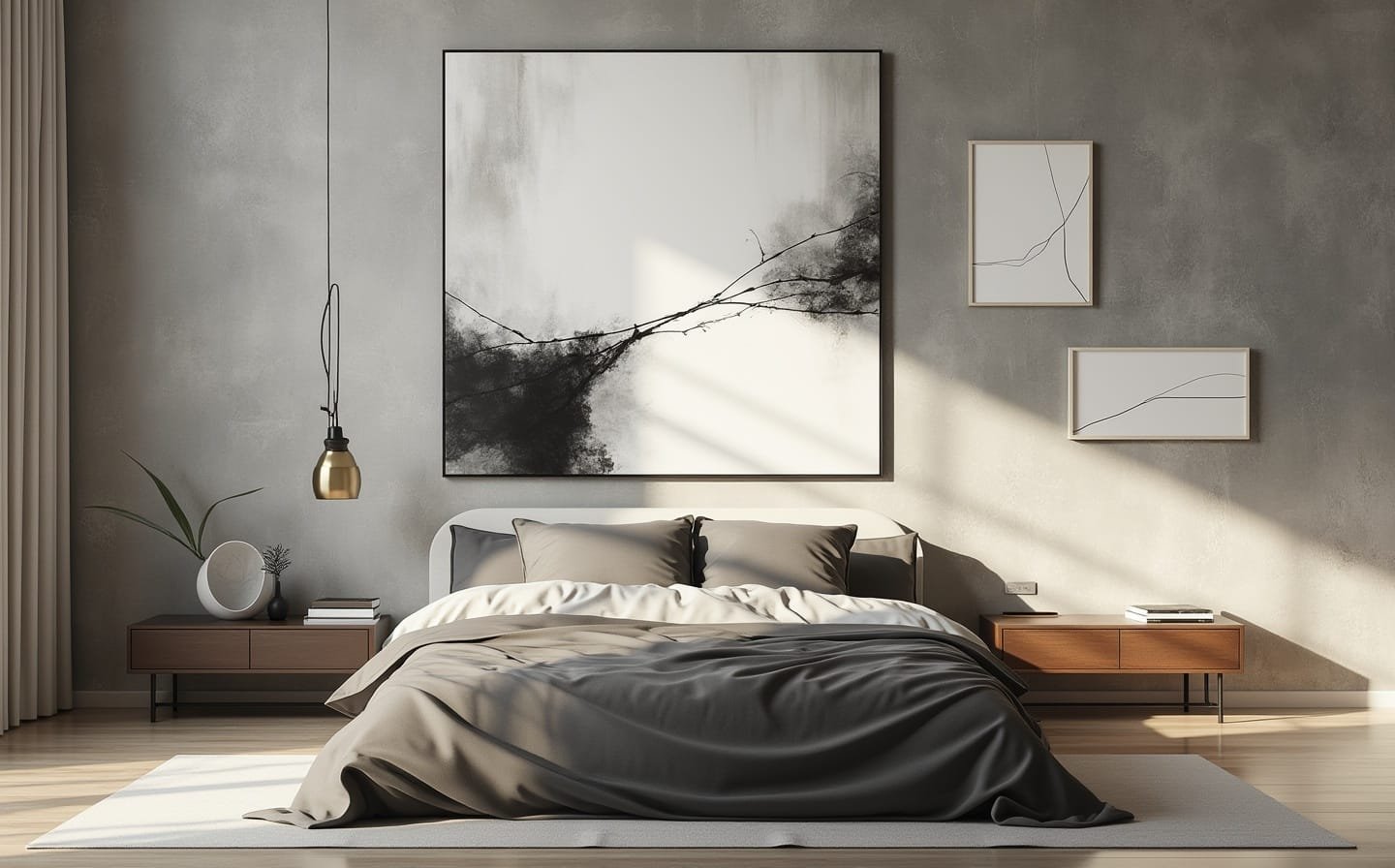
Soft minimalist bedrooms need cozy, layered bedding to create comfort without clutter. A simple white fitted sheet creates a clean foundation for the bed.
Add a lightweight cotton duvet in a neutral shade like cream, gray, or white. The duvet brings warmth while maintaining the minimalist aesthetic.
Natural textiles like linen add subtle texture. One or two linen pillowcases mixed with cotton ones create gentle visual interest without overwhelming the space.
A folded throw blanket at the foot of the bed provides an extra layer when needed. Choose soft materials like wool or cotton in solid colors that match the room’s palette.
Two to four pillows is enough for most beds. Mix standard and euro-sized pillows, keeping patterns minimal or using solid colors only.
The key is choosing quality materials that feel good against the skin. Natural fibers like cotton, linen, and wool maintain the soft minimalist style while providing comfort.
6) Simple Artwork
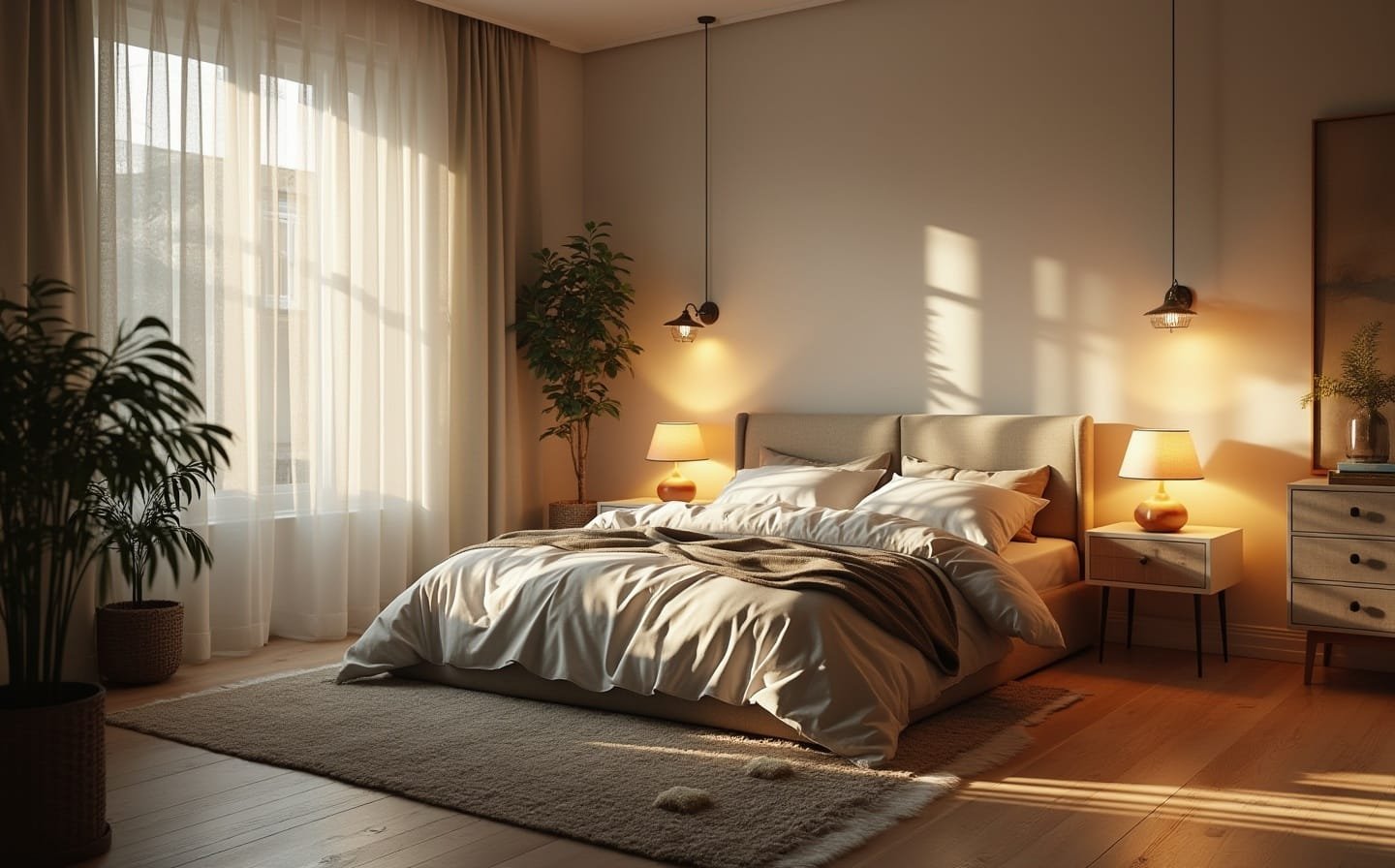
Clean artwork adds a personal touch to a soft minimalist bedroom without creating visual clutter. A single large piece on the main wall creates an elegant focal point while maintaining simplicity.
Black and white photography works well in minimalist spaces. Simple line drawings and abstract pieces with neutral colors also fit perfectly into this style.
Keep frames minimal and clean. Thin metal frames in white, black, or natural wood tones complement the soft minimalist aesthetic.
Limit artwork to one or two pieces per wall. Empty wall space is essential in minimalist design, so avoid creating gallery walls or hanging multiple pieces close together.
Nature-inspired prints and botanical illustrations bring subtle life to the space. Choose pieces with plenty of negative space and soft, muted colors.
Consider removable wall decals for a low-commitment option. Simple geometric shapes or subtle patterns can add interest without overwhelming the room.
Display artwork at eye level for the best visual impact. This placement creates balance and helps maintain the room’s peaceful atmosphere.
7) Warm Lighting
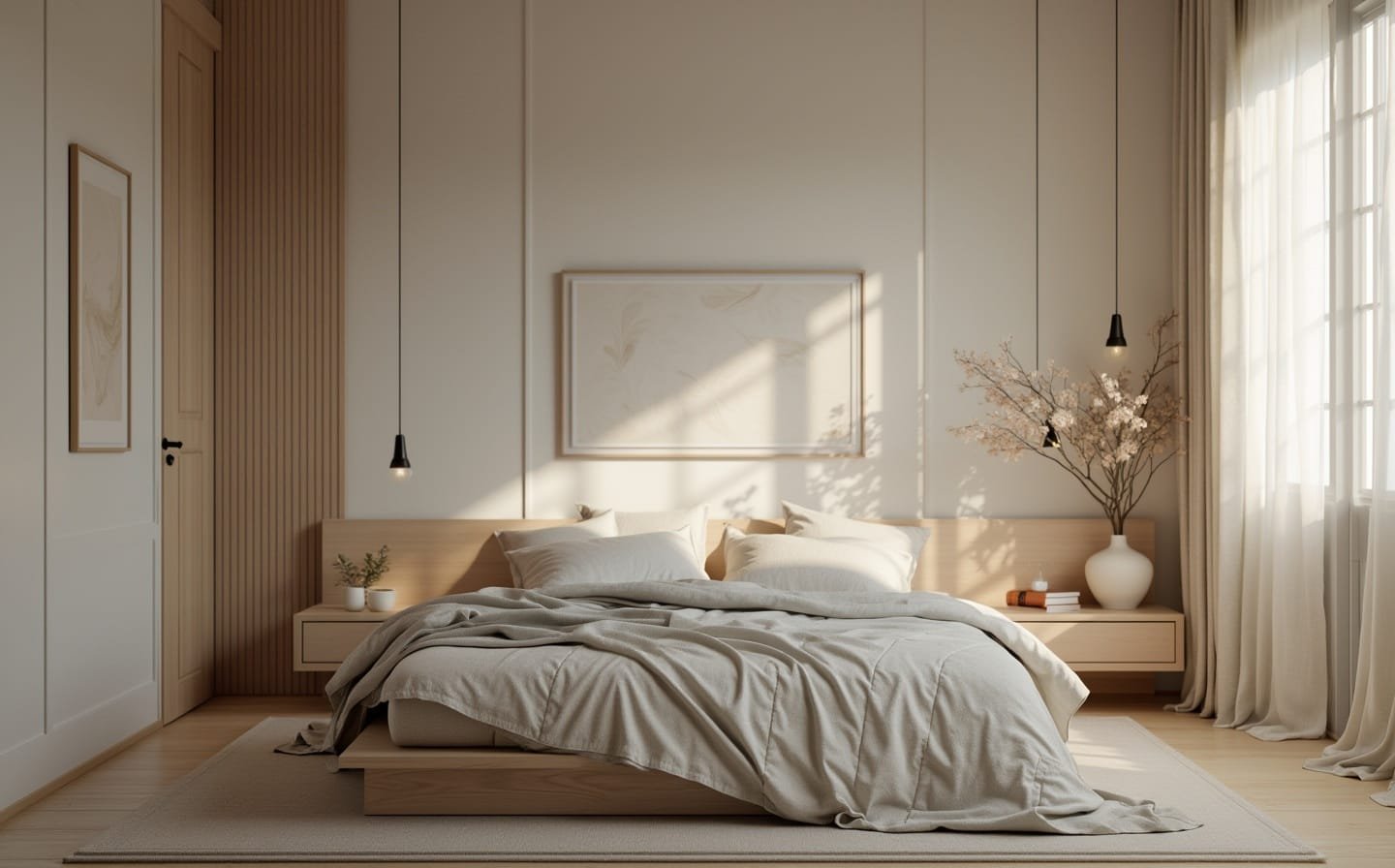
Warm lighting creates a cozy and relaxing atmosphere in a soft minimalist bedroom. The right lighting temperature ranges from 2700K to 3000K, producing a gentle amber glow rather than harsh white light.
Table lamps with fabric shades spread soft light throughout the room. Placing them on bedside tables or dressers adds warmth without cluttering the space.
Wall sconces provide ambient lighting while maintaining clean lines. Installing them on either side of the bed eliminates the need for table lamps and keeps surfaces clear.
Smart bulbs allow easy adjustment of light intensity throughout the day. Dimming the lights in the evening helps prepare the body for sleep and maintains the room’s peaceful atmosphere.
Natural light plays an important role during daytime hours. Light filtering curtains or sheer blinds soften sunlight while preserving the connection to the outdoors.
Layer different light sources at various heights to create depth. A combination of ceiling lights, wall lights, and table lamps offers flexibility for different activities and moods.
Design Principles

Soft minimalist bedrooms follow essential design principles that create peaceful, clutter-free spaces. These principles focus on clean lines, basic shapes, and calming colors.
Emphasizing Simplicity
Clean lines and minimal decoration form the foundation of soft minimalist bedrooms. Each piece of furniture serves a clear purpose, with no extra elements to distract from the room’s tranquil atmosphere.
Choose furniture with simple shapes and smooth surfaces. A low-profile bed frame, basic nightstands, and a sleek dresser work well together.
Storage solutions should blend seamlessly into the space. Built-in closets and under-bed storage keep items hidden while maintaining the room’s clean appearance.
Decor remains modest, with just 2-3 carefully chosen pieces per surface. A single artwork above the bed or a small ceramic vase can add character without overwhelming the space.
Neutral Color Palette
Soft whites, warm beiges, and gentle grays create a soothing foundation. These colors reflect natural light and make rooms feel more spacious.
Key neutral colors:
- Ivory
- Greige
- Light taupe
- Soft white
- Pale gray
Layer different shades of the same color to add depth. Mix textures through bedding, curtains, and rugs while staying within the neutral range.
Natural materials like linen, cotton, and wool add warmth to the space. These materials bring subtle variations in tone that keep the room from feeling flat or sterile.