
7 Modern Above-Couch Wall Decor Ideas (Transform Your Space)


The space above a couch often feels empty and incomplete without the right decorative elements. Empty walls can make rooms look unfinished and fail to showcase personal style or create visual interest in living spaces.
Choosing the perfect above-couch wall decor transforms blank spaces into stunning focal points while adding personality and style to any room.
Modern wall decor options range from bold statement pieces to subtle arrangements that complement existing room designs and create balanced, inviting spaces.
1) Gallery Wall Arrangement
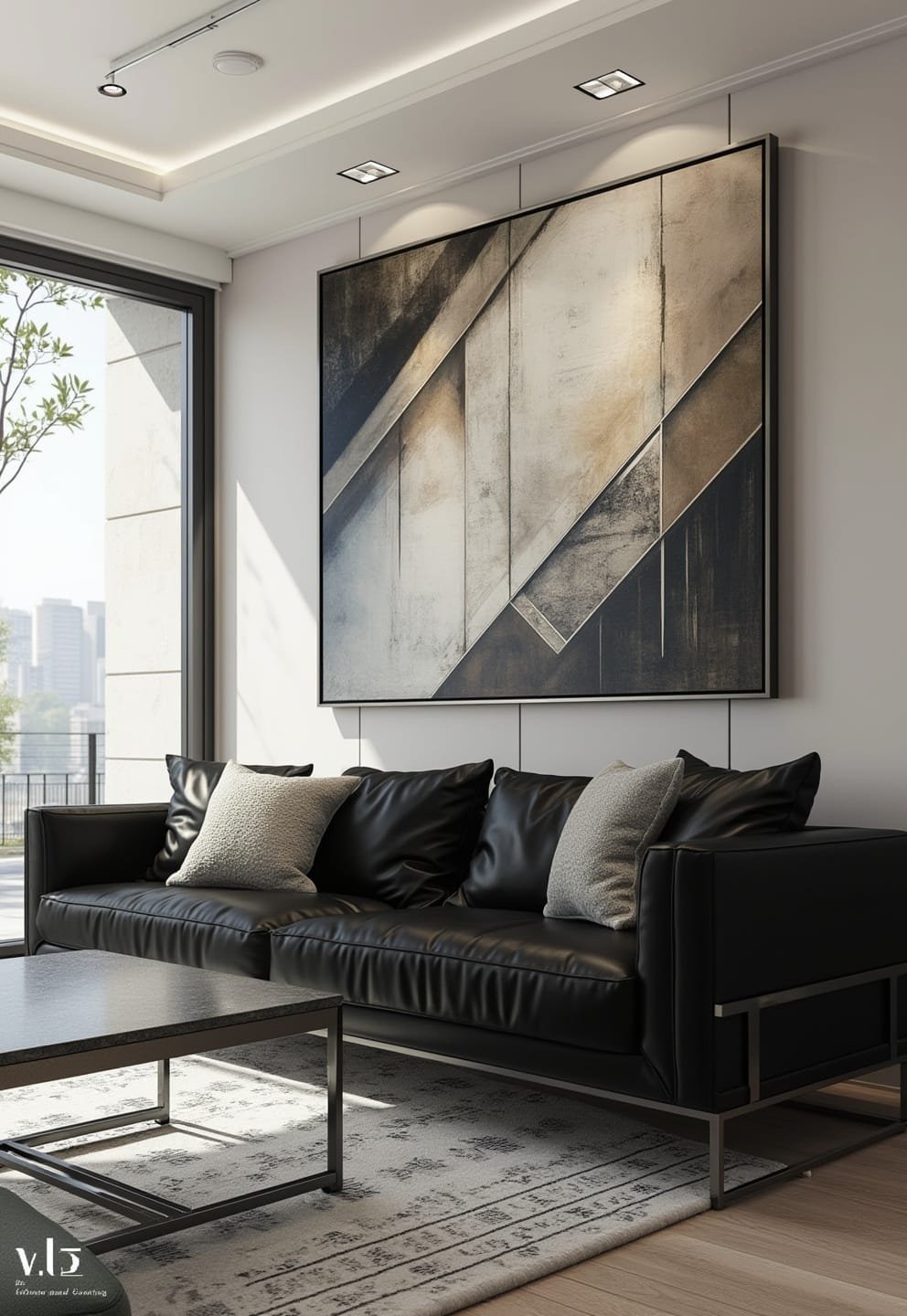
Gallery walls add visual interest and personality above a couch. They combine multiple pieces of art, photos, and decorative items to create a unified display.
The most effective gallery walls start with a larger anchor piece placed in the center or slightly off-center above the couch. This piece sets the tone for the entire arrangement.
Spacing between items should be consistent, typically 2-4 inches apart. This creates a cohesive look while giving each piece room to stand out.
Mixing frame styles and sizes adds depth to the arrangement. Black, white, and metallic frames work well together when arranged thoughtfully.
A balanced gallery wall includes a mix of art types. Photos, prints, paintings, and three-dimensional items like mirrors or wall sculptures create visual variety.
The arrangement should span about two-thirds of the couch’s width. This proportion creates a balanced look that doesn’t overwhelm the space.
Before hanging anything, lay out the arrangement on the floor. This step helps visualize the final look and makes adjustments easier.
Consider using paper templates on the wall to test the layout. This method prevents unnecessary wall damage and ensures proper spacing.
2) Abstract Geometric Prints
Fabric wall panels add texture and style above the couch while helping absorb sound in the room. These panels can match any decor style by using fabrics that complement the existing color scheme.
Creating fabric wall panels starts with wooden frames built from 1×2 lumber. The frames should be sized to create a balanced arrangement above the couch, typically ranging from 24 to 36 inches in size.
Batting or foam padding gets wrapped around each frame to create softness. The chosen fabric then stretches tightly across the padding and secures to the back of the frame with a staple gun.
The panels mount to the wall using picture hanging hardware or French cleats. Arranging three to five panels horizontally creates an eye-catching display that fills the wall space appropriately.
Common fabric choices include linen, velvet, or patterned cotton. Selecting fabrics with different textures within the same color family adds visual interest while maintaining a cohesive look.
These DIY panels cost much less than store-bought versions. One panel typically requires about $20-30 in materials, making this an budget-friendly option for large wall spaces.
7) Vintage Posters Set

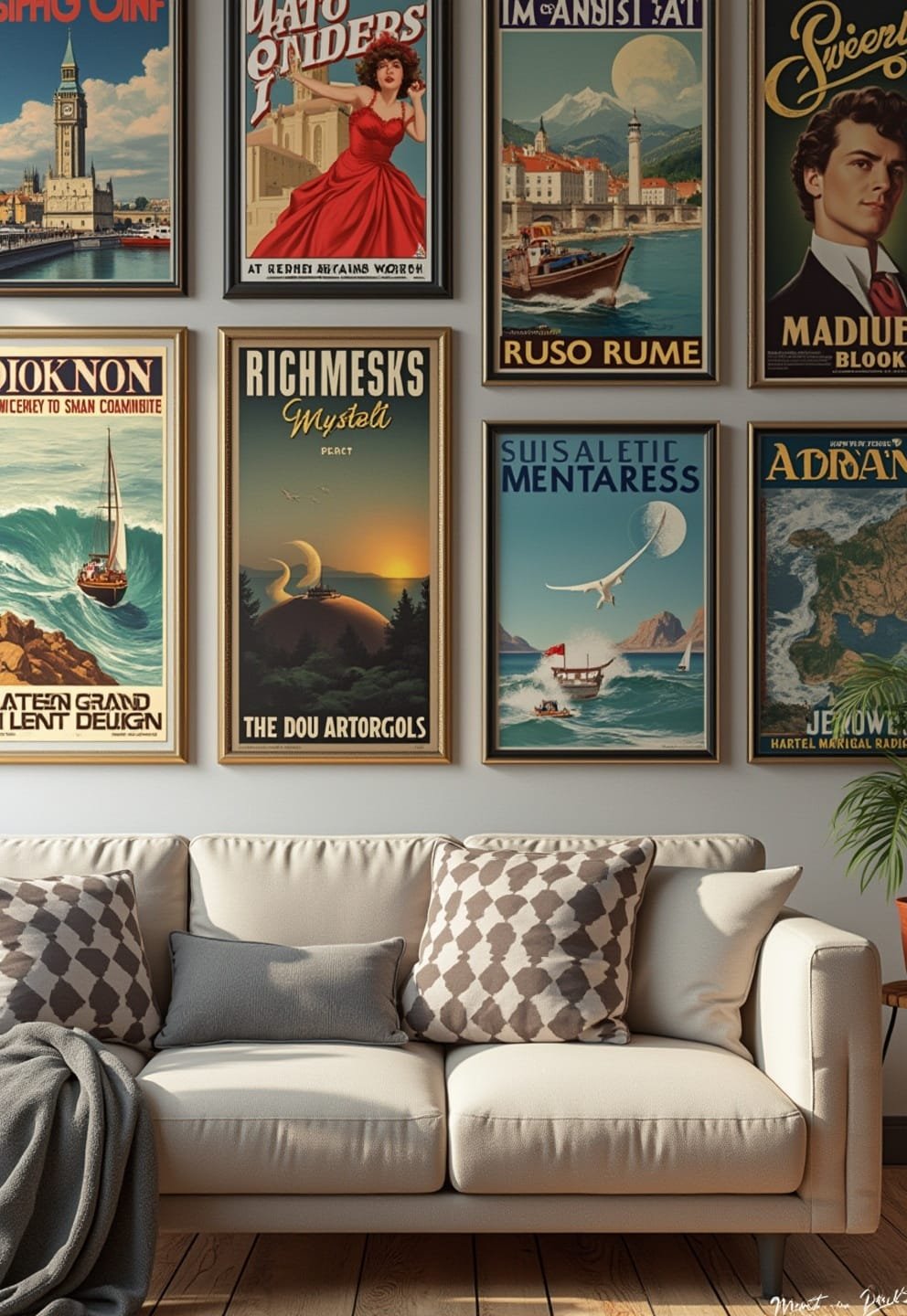
Vintage posters bring a nostalgic and artistic touch to the wall space above a couch. A carefully curated set of 3-5 vintage-style posters creates visual interest while maintaining a cohesive look.
Travel posters from the 1920s and 1930s remain popular choices for modern homes. Their bold colors and Art Deco designs add both style and a sense of adventure to living room walls.
Movie posters from classic films make excellent conversation starters. Original prints can be expensive, so many homeowners opt for high-quality reproductions that maintain the authentic vintage look.
Vintage advertisement posters showcase products and brands from past eras. These pieces often feature striking typography and illustrations that work well in both traditional and contemporary spaces.
When arranging vintage posters, using matching frames helps unite the collection. Black, gold, or wood-toned frames complement most vintage poster styles while adding a polished appearance.
The spacing between posters should be consistent, typically 2-4 inches apart. This creates a balanced display that draws the eye across the entire arrangement without appearing cluttered.
Choosing The Right Color Palette
The perfect color scheme creates visual harmony between your wall art and living space, while reflecting your personal style and the room’s atmosphere.
Understanding Color Theory
The color wheel serves as a guide for selecting wall decor that matches your couch and room. Primary colors – red, blue, and yellow – form the foundation of all other hues.
Secondary colors emerge from mixing primary colors: purple, green, and orange. These create rich possibilities for accent pieces.
Neutral colors like beige, gray, and white act as versatile bases that work with most decor styles. They provide balance and sophistication to bolder art choices.
Complementary vs. Contrasting Colors
Complementary colors sit opposite each other on the color wheel, like blue and orange or purple and yellow. These pairings create dynamic visual interest above couches.
Contrasting colors use different shades within the same color family. A navy blue couch pairs well with light blue or turquoise artwork.
Color Intensity Tips:
- Bold artwork: Choose subtle wall colors
- Neutral couch: Select vibrant art pieces
- Pattern mixing: Stick to a consistent color scheme
When mixing multiple pieces, use one dominant color as an anchor. This creates a cohesive look while allowing for creative expression.
Incorporating Textures

Textures add depth and visual interest to wall decor above a couch. The right mix of materials creates a balanced, layered look that brings warmth to the space.
Types of Materials
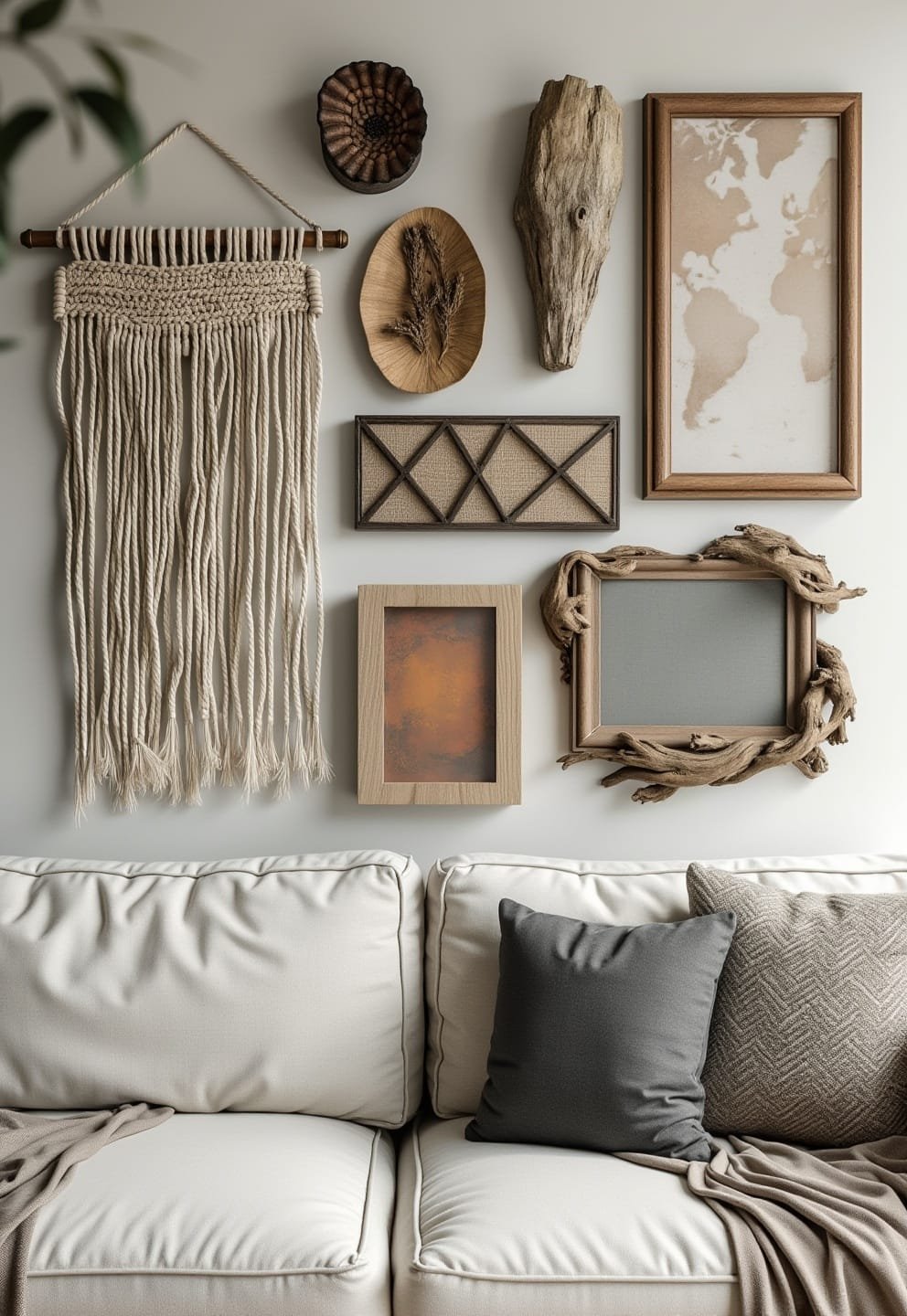
Natural fibers like woven tapestries and macrame wall hangings bring softness to wall decor. These pieces create movement and catch light in unique ways throughout the day.
Metal artwork adds shine and reflective qualities. Hammered copper, brushed nickel, or brass pieces can catch and scatter light across the wall.
Wooden elements bring warmth through their natural grain patterns. Carved panels, driftwood art, or wooden wall sculptures create organic texture.
Fabric art pieces like quilted wall hangings or framed textiles add softness. These elements can incorporate patterns while maintaining a tactile quality.
Balancing Smooth and Rough Surfaces
A mix of contrasting textures creates visual interest. Pair smooth glass frames with rough natural elements for dramatic effect.
Layer pieces at different depths from the wall. Mount some items flush while others project outward to create dimension.
Consider scale when mixing textures. Large smooth surfaces work well with smaller textured accents.
Group similar textures together in clusters. This creates focal points without overwhelming the space.
Leave some breathing room between different textures. Empty wall space helps each textured element stand out.
7) Vintage Posters Set
Vintage posters bring a nostalgic and artistic touch to the wall space above a couch. A carefully curated set of 3-5 vintage-style posters creates visual interest while maintaining a cohesive look.
Travel posters from the 1920s and 1930s remain popular choices for modern homes. Their bold colors and Art Deco designs add both style and a sense of adventure to living room walls.
Movie posters from classic films make excellent conversation starters. Original prints can be expensive, so many homeowners opt for high-quality reproductions that maintain the authentic vintage look.
Vintage advertisement posters showcase products and brands from past eras. These pieces often feature striking typography and illustrations that work well in both traditional and contemporary spaces.
When arranging vintage posters, using matching frames helps unite the collection. Black, gold, or wood-toned frames complement most vintage poster styles while adding a polished appearance.
The spacing between posters should be consistent, typically 2-4 inches apart. This creates a balanced display that draws the eye across the entire arrangement without appearing cluttered.
Choosing The Right Color Palette
The perfect color scheme creates visual harmony between your wall art and living space, while reflecting your personal style and the room’s atmosphere.
Understanding Color Theory
The color wheel serves as a guide for selecting wall decor that matches your couch and room. Primary colors – red, blue, and yellow – form the foundation of all other hues.
Secondary colors emerge from mixing primary colors: purple, green, and orange. These create rich possibilities for accent pieces.
Neutral colors like beige, gray, and white act as versatile bases that work with most decor styles. They provide balance and sophistication to bolder art choices.
Complementary vs. Contrasting Colors
Complementary colors sit opposite each other on the color wheel, like blue and orange or purple and yellow. These pairings create dynamic visual interest above couches.
Contrasting colors use different shades within the same color family. A navy blue couch pairs well with light blue or turquoise artwork.
Color Intensity Tips:
- Bold artwork: Choose subtle wall colors
- Neutral couch: Select vibrant art pieces
- Pattern mixing: Stick to a consistent color scheme
When mixing multiple pieces, use one dominant color as an anchor. This creates a cohesive look while allowing for creative expression.
Creating Visual Balance
Visual balance transforms a plain wall into an engaging display through careful placement of art and decor pieces. The right arrangement creates a sense of harmony while making the space feel polished and complete.
Symmetrical Arrangements
Symmetrical layouts create a classic, formal look above the couch. A large central piece serves as an anchor, with matching items placed on each side.
The spacing between pieces matters greatly. Leave 2-4 inches between frames when hanging multiple items. This creates visual breathing room without making the display feel disconnected.
Common Symmetrical Layouts:
- Single large piece centered above couch
- Three equally-sized pieces in a row
- Five-piece gallery with larger center artwork
- Mirror-image arrangements on both sides
Asymmetrical Techniques
Asymmetrical arrangements offer a relaxed, modern feel. They maintain balance through visual weight. Mix different sizes and shapes while keeping the overall display feeling even.
Start with a dominant piece slightly off-center. Add smaller items around it. Pay attention to how they draw the eye across the wall.
Tips for Asymmetrical Balance:
- Pair large light-colored pieces with smaller dark ones
- Mix vertical and horizontal orientations
- Vary frame styles while keeping colors coordinated
- Group odd numbers of items together
The empty space between pieces becomes part of the design. Leave slightly more room between items than in symmetrical layouts to create a casual flow.


