Bauhaus Revolution: Transforming Spaces With Timeless Form and Function

What is Bauhaus Interior Design? Where Function and Form Create Design Magic
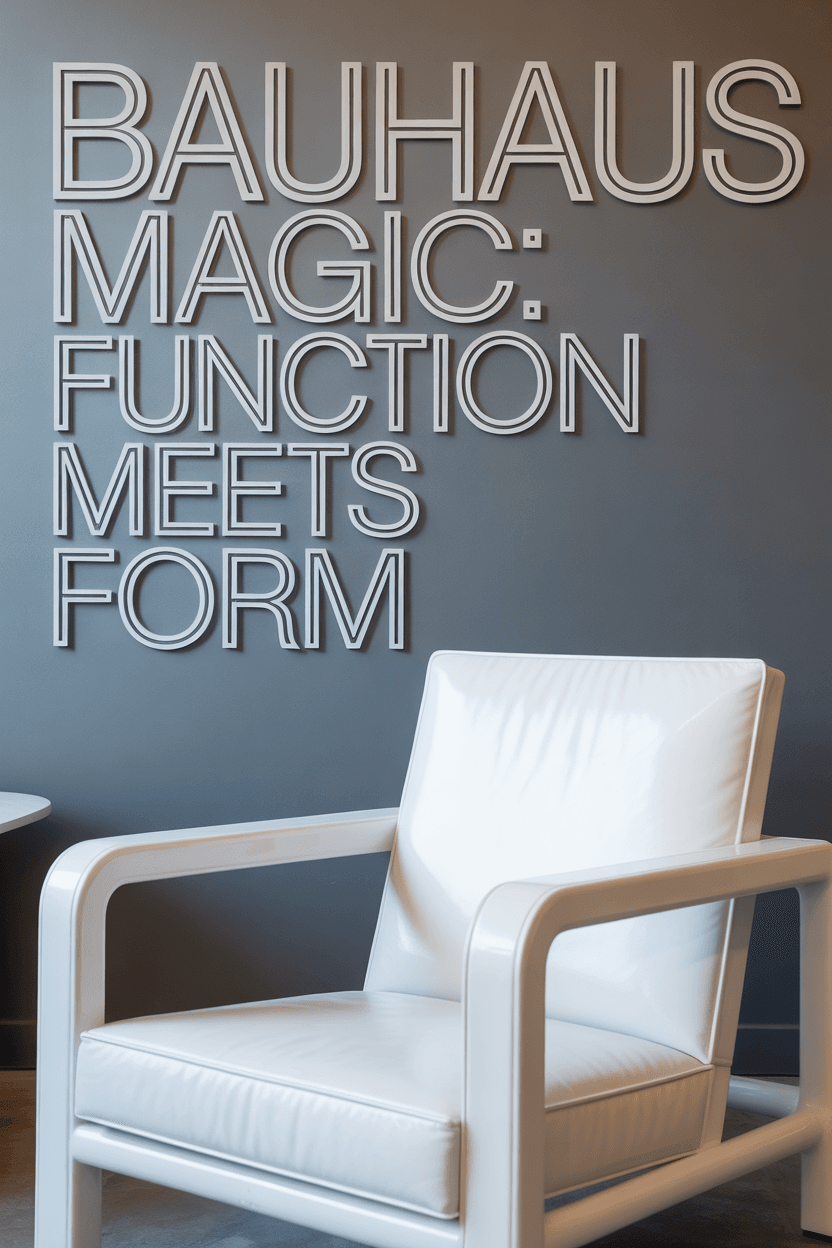
Bauhaus interior design represents one of the most influential movements in modern design history, combining functional practicality with aesthetic elegance. This revolutionary approach transformed how we think about our living spaces by embracing clean lines, industrial materials, and logical spatial arrangements.
Imagine if your furniture had a revolutionary meeting and decided, “Hey, let’s be useful AND gorgeous!” That’s essentially what happened with Bauhaus design.
This movement kicked boring, fussy interiors to the curb and said “hello” to clean lines, industrial materials, and spaces that actually make sense. If you’re tired of tripping over decorative whatnots that serve zero purpose, Bauhaus principles might just be your new best friend.
Think of it as the Marie Kondo of design movements – but from 100 years ago! So grab your geometry set and primary colors – we’re about to transform your home into a masterpiece of purposeful elegance.
The Origins and Philosophy of Bauhaus Design: When Germans Revolutionized Practical Beauty
In 1919, while everyone else was still recovering from WWI, architect Walter Gropius launched the Bauhaus school in Weimar, Germany. Picture a bunch of brilliant creatives saying, “Let’s make beautiful things that everyone can actually use!”
This revolutionary approach challenged the notion that good design was only for the wealthy. The school became a breeding ground for ideas that would influence architecture and design for generations.
Key Bauhaus Design Principles That Still Make Perfect Sense:
- Form follows function: If it looks pretty but you keep bumping your shins on it, it’s failed the Bauhaus test!
- Truth to materials: No fake wood here, folks! That steel should look like steel and be proud of it!
- Minimalist design: Remember that junk drawer you’ve been meaning to clean out? Bauhaus would have never let that happen.
- Accessibility through production: Good design for everyone, not just people with mansions!
These aren’t just dusty old ideas from a century ago – they’re basically the great-grandparents of that sleek iPhone in your pocket right now. The principles shaped modern industrial design, architecture, and even digital interfaces.
Essential Elements That Define Authentic Bauhaus Interior Design
When your design-savvy friend walks in and says, “Oh, very Bauhaus!” here’s what they’re seeing. These elements work together to create spaces that are both visually striking and incredibly functional.
Geometric Forms and Clean Lines
Bauhaus spaces love geometry so much, it’s practically a love affair. Squares, rectangles, circles – if you learned it in elementary school geometry, it’s probably in a Bauhaus room.
The designers believed that simple geometric forms were universally appealing and timeless. This approach creates visual harmony and prevents spaces from feeling chaotic or overwhelming.
Bauhaus Color Theory in Interior Design
The Bauhaus color palette is like that super-organized friend who color-codes everything. They used primary colors (red, yellow, blue) with the enthusiasm of a kindergarten teacher, balanced with neutral tones (black, white, gray) for when you need to calm things down.
Each color had a job to do. Red energized spaces, blue created calm, yellow brought warmth, and neutrals provided breathing room.
Industrial Materials That Define the Bauhaus Look
Bauhaus designers were basically material matchmakers, falling head over heels for steel, glass, concrete, and leather. They let these materials be themselves – no hiding concrete under wallpaper or pretending steel is wood.
This honesty in materials created a new aesthetic that celebrated industrial beauty. The result was furniture and spaces that looked modern, clean, and refreshingly straightforward.
Iconic Bauhaus Furniture That Changed Design Forever
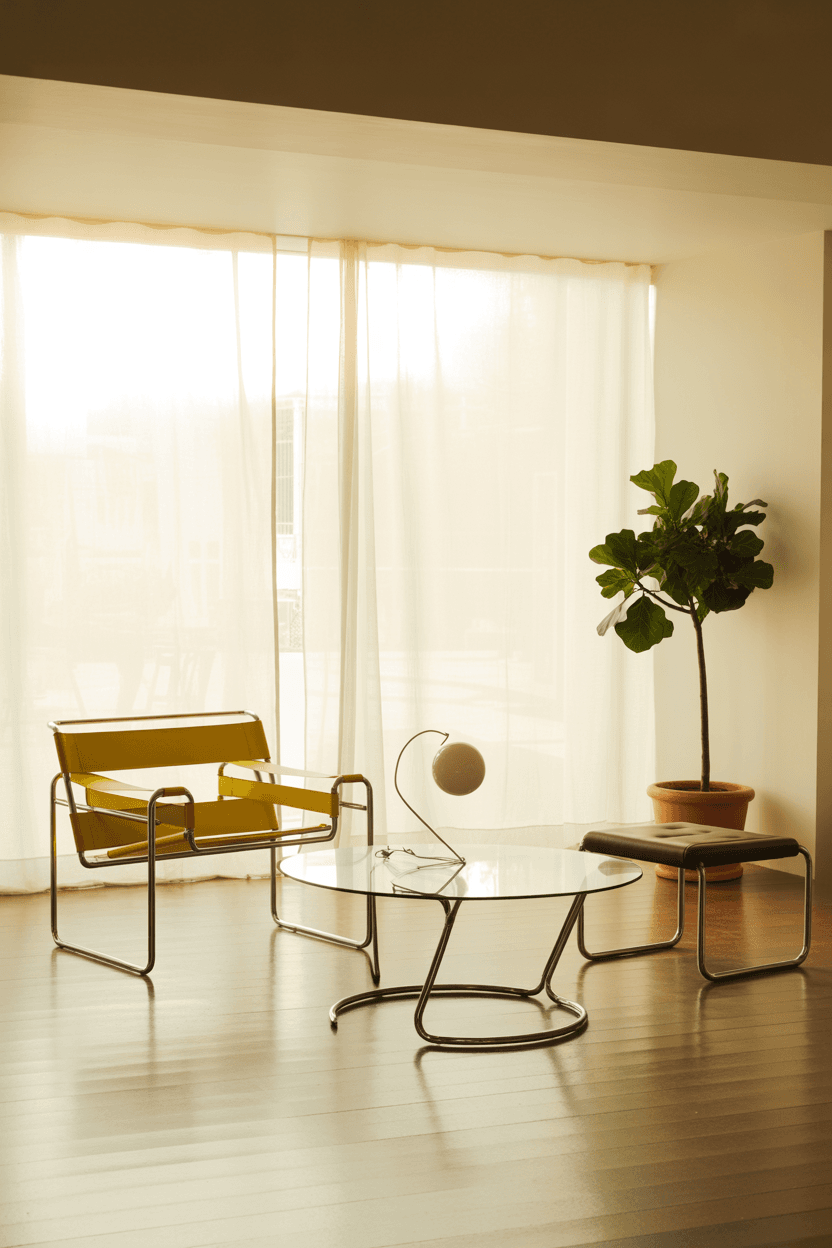
These pieces aren’t just furniture; they’re design royalty that continues to influence creators today. Each piece demonstrates how revolutionary thinking can transform everyday objects into works of art.
Marcel Breuer’s Wassily Chair (1925)
Inspired by bicycle handlebars, this chair looks like it belongs in both a museum AND your living room. It’s the superhero of seating – lightweight yet strong, minimalist yet comfortable.
Your regular armchair looks downright sluggish in comparison. The chair’s tubular steel frame and canvas seat created a new language for modern furniture that designers still reference today.
Ludwig Mies van der Rohe’s Barcelona Chair (1929)
This chair is so refined it was originally designed for the King and Queen of Spain! Yet it’s basically just leather and steel in a gloriously simple X shape.
It’s like the James Bond of furniture – sophisticated, elegant, and impossibly cool. The chair demonstrates how luxury can be achieved through perfect proportions rather than ornate decoration.
Wilhelm Wagenfeld’s Table Lamp (1924)
This lamp doesn’t hide anything – its bulb is visible through a glass globe like it’s saying, “Yes, I use electricity, deal with it!” It’s refreshingly honest in a world of lampshades with identity crises.
The design strips lighting down to its essential elements while creating an object of pure beauty. This transparency became a hallmark of modernist design philosophy.
Creating a Stunning Bauhaus-Inspired Living Room
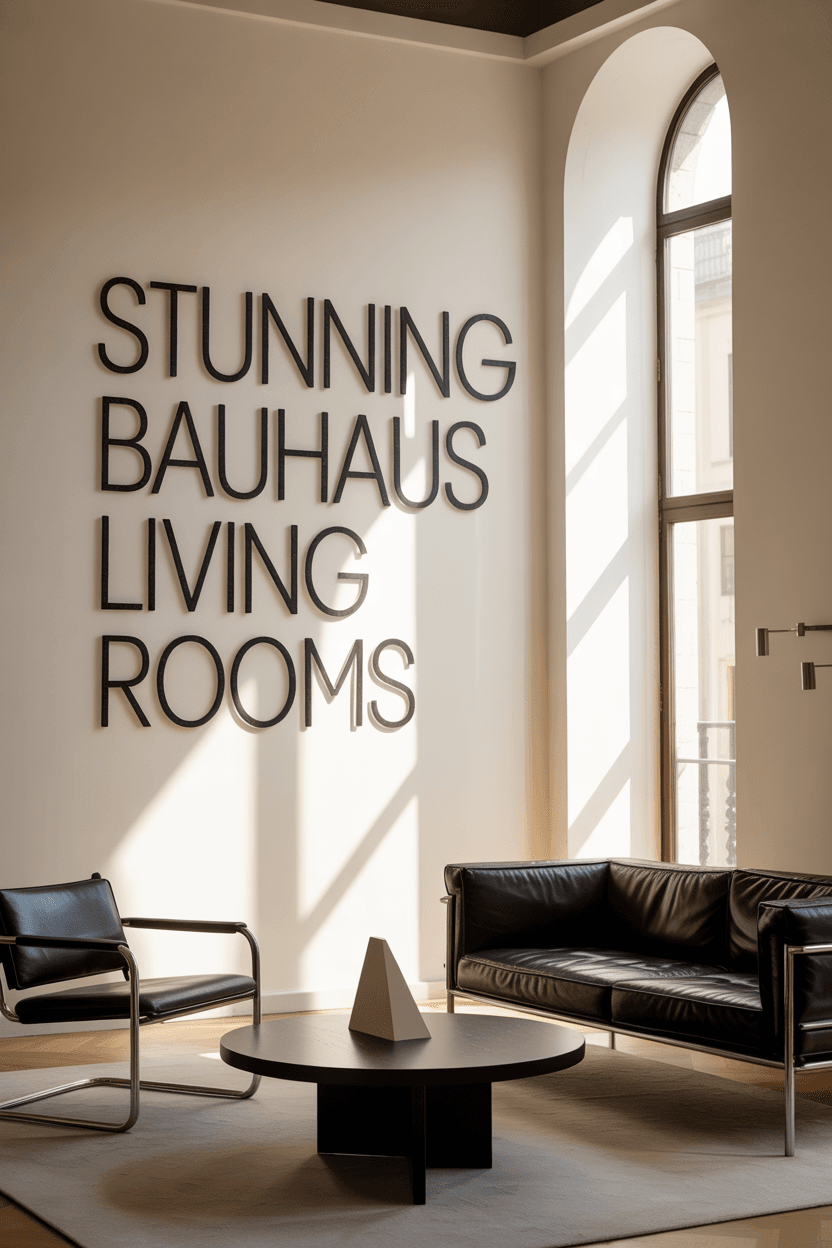
Your living room can become a masterpiece of functional beauty without emptying your bank account. The key lies in understanding Bauhaus principles and applying them thoughtfully to your space.
Choosing the Perfect Bauhaus Color Palette
Start with a blank canvas of whites, blacks, and grays, then add primary colors like you’re a painter who only bought the starter pack. Consider a red accent wall that makes guests pause in appreciation when they enter.
Use color blocks to separate your Netflix viewing area from your reading nook. Black and white serve as your base, with yellow or blue accents that pop like design exclamation points.
Selecting Bauhaus Furniture for Modern Living
Look for pieces that celebrate their construction rather than hiding it. Visible tubular frames, simple upholstery, and honest materials create the authentic Bauhaus aesthetic.
Arrange furniture in a way that actually makes sense for how humans move and interact. Create conversation areas that encourage socializing rather than forcing everyone to stare at the television.
Bauhaus Lighting Solutions for Atmosphere and Function
- Wall sconces that adjust like they’re doing yoga
- Floor lamps that could double as sculpture
- Pendant lights so simple they’re profound
- Strategic placement that considers actual human activities
Designing a Bauhaus-Inspired Kitchen Where Function Reigns Supreme
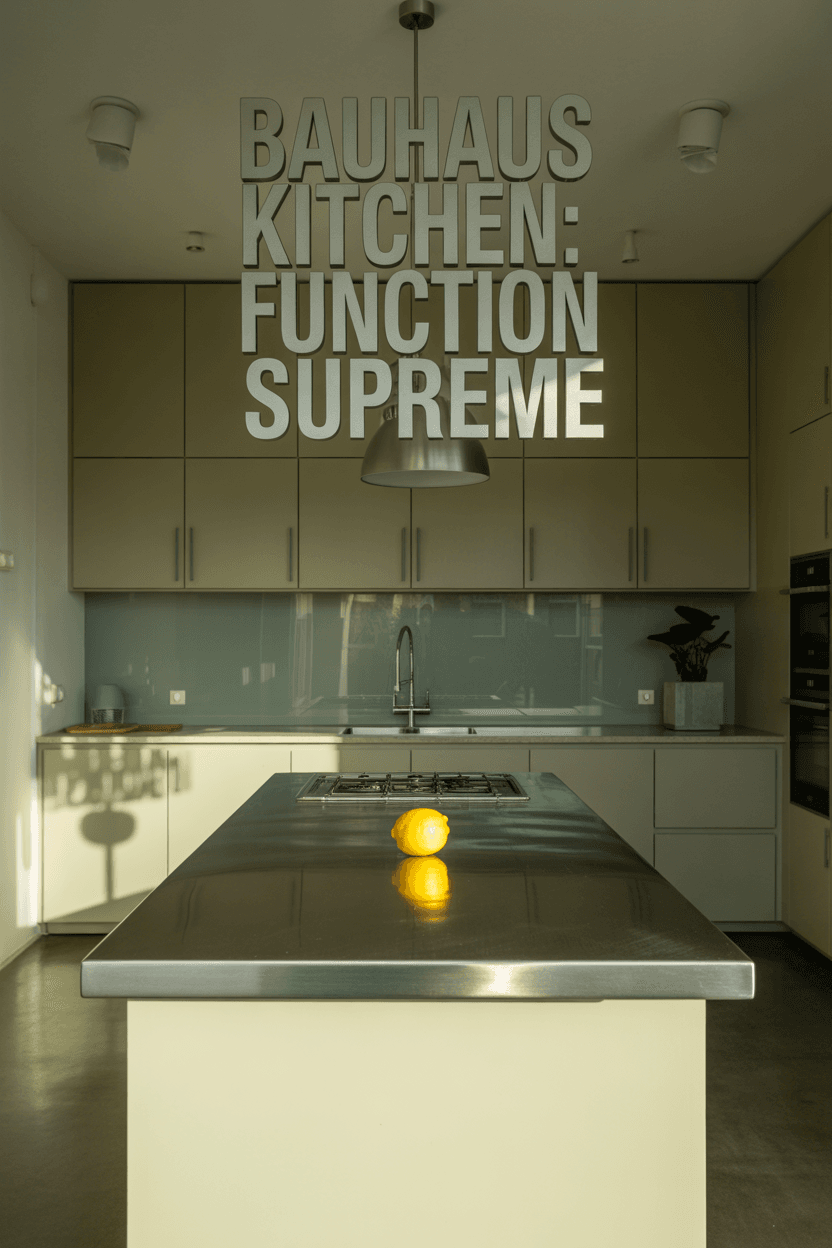
The kitchen represents Bauhaus heaven – a space where everything should have a clear purpose and work efficiently. This room allows you to embrace the movement’s core principle that beautiful design emerges from functional excellence.
Efficiency-Focused Kitchen Layout Ideas
Analyze your cooking style like you’re a culinary scientist. Create zones for prep, cooking, and cleanup that flow logically from one to the next.
Embrace open plans where you can chat with guests while preparing meals. Eliminate those weird corners where food goes to die and appliances gather dust.
Best Materials for a Bauhaus Kitchen Design
- Stainless steel countertops that withstand intensive cooking sessions
- Glass backsplashes that clean up with a single wipe
- Simple cabinet fronts that don’t collect greasy fingerprints
- Flooring that handles dropped ingredients gracefully
Smart Storage Solutions with Bauhaus Aesthetics
Design storage that makes organization effortless. Pull-out systems reveal your organizational superiority while hidden storage makes clutter disappear.
Open shelving forces you to curate your dishware like a museum, displaying only pieces that earn their place through beauty and function. Handleless cabinets create clean lines that flow seamlessly across surfaces.
Bauhaus Elements in Bedroom Design for Restful Simplicity
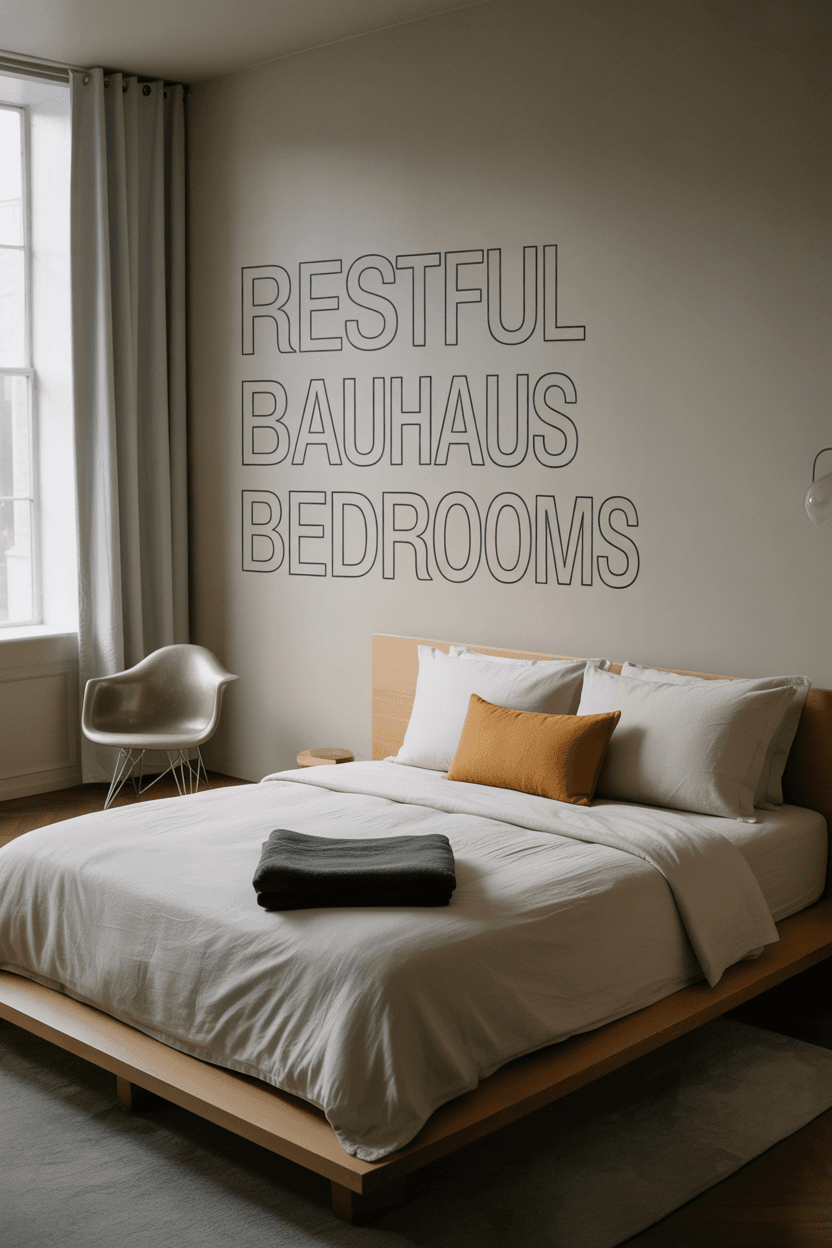
Your bedroom doesn’t need to look like a furniture showroom exploded. Bauhaus principles create serene spaces that promote rest while maintaining visual interest through thoughtful design choices.
Minimalist Bedroom Furniture Selection
Start with just the essentials: a bed frame so simple it looks like it was sketched with a ruler. Choose nightstands that hold exactly what you need without visual clutter.
Add a reading chair that serves as both functional seating and sculptural element. Select wardrobes that could be mistaken for minimalist art installations while providing ample storage.
Bauhaus Textiles and Bedding Ideas
- Solid colored bedding in shades that promote calm
- Primary-colored pillows that pop against white sheets
- Textiles with subtle patterns that reward close observation
- Natural fabrics that feel luxurious without being fussy
Creating the Perfect Bauhaus Bedroom Lighting Plan
Design lighting that adapts to different activities and moods. Reading lamps adjust to your late-night page-turning angles while pendant lights double as art when not illuminated.
Use indirect lighting that flatters and creates atmosphere. Plan each light source with actual human activities in mind – revolutionary thinking that puts comfort first.
Small Space Bauhaus Design That Maximizes Every Square Inch
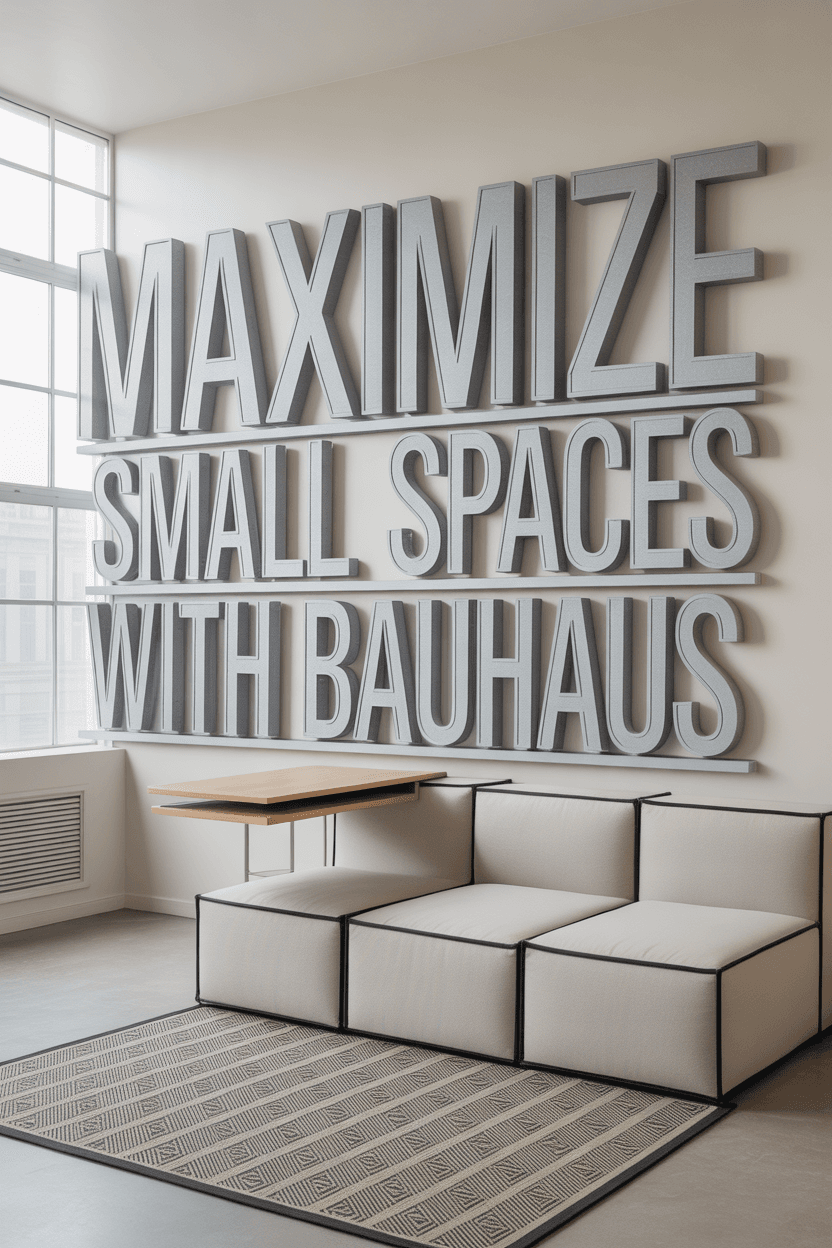
If your home makes a shoebox look spacious, Bauhaus principles become your secret weapons. These design strategies help small spaces feel larger, more organized, and infinitely more sophisticated.
Space-Maximizing Techniques Using Bauhaus Design
Create floors and walls in consistent colors to unify your space visually. Choose furniture that appears to float, giving the illusion of more floor space and easier cleaning.
Use mirrors strategically to create the illusion that your apartment isn’t actually a converted closet. Eliminate visual clutter faster than you can say “open concept.”
Best Multifunctional Furniture for Small Bauhaus Interiors
- Sofa beds that don’t look like they belong in a college dorm
- Dining tables that expand when guests arrive
- Storage ottomans that hide your secret snack stash
- Nesting tables that multiply like rabbits when needed
- Wall-mounted desks that disappear when your workday ends
Color Strategies to Define Areas in Studio Apartments
Use bold primary colors to distinguish your work zone from your relaxation area. Apply color-blocking to create “rooms” without the expense of walls.
Place rugs strategically to define spaces and add warmth to hard surfaces. Use lighting to create zones like you’re directing a sophisticated movie set.
Modern Interpretations of Bauhaus Interior Design
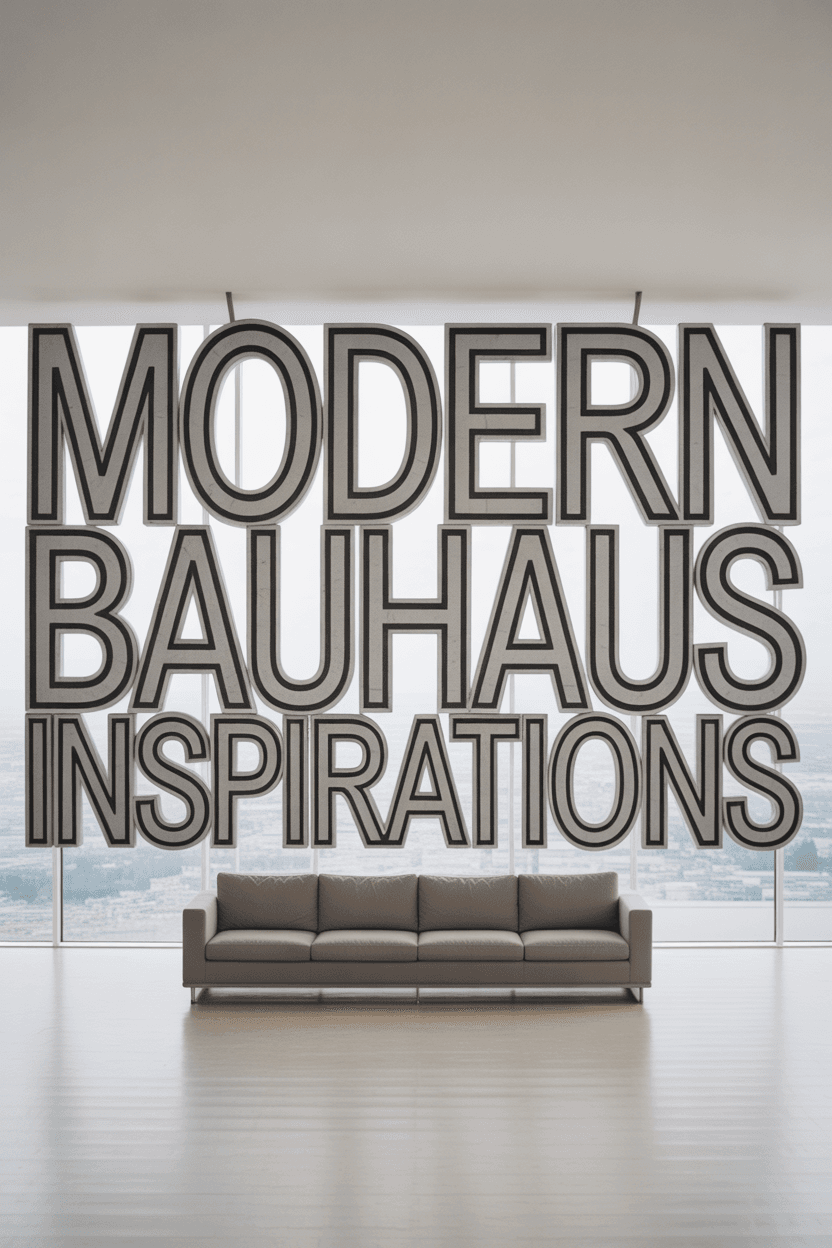
Bauhaus isn’t just history – it’s actively influencing your favorite contemporary designers. These modern interpretations prove that good design principles are timeless, even as materials and technologies evolve.
Contemporary Designers Influenced by Bauhaus
Today’s design stars carry the Bauhaus torch: Konstantin Grcic, Jasper Morrison (master of “normal” done brilliantly), Patricia Urquiola (adding warmth to geometry), and Tom Dixon (making industrial materials look sexy). They’re creating pieces that would make the original Bauhaus designers say, “We were really onto something!”
New Materials Extending Bauhaus Principles
Technology has given us new ways to embrace Bauhaus philosophy. Carbon fiber brings strength with minimal weight, smart glass changes opacity on command, and 3D-printed components allow complex geometries with clean aesthetics.
These materials maintain the Bauhaus commitment to honesty and function while pushing the boundaries of what’s possible. The result? Spaces that feel both timeless and cutting-edge.
Sustainable Bauhaus Design for Modern Living
Contemporary Bauhaus design embraces sustainability as the ultimate functional requirement. Designers choose materials that last generations, create furniture that adapts to changing needs, and eliminate waste through thoughtful planning.
This approach honors the original Bauhaus vision of accessible, well-designed products while addressing modern environmental concerns. The result proves that responsible design and stunning aesthetics strengthen each other rather than compete.