7 Ways to Add Cabinets to Your Laundry Room (Space Magic!)


Adding cabinets to your laundry room can transform it from a cluttered space into an organized and functional area. Proper storage makes laundry tasks more efficient and keeps supplies neatly tucked away. The right cabinets not only improve the room’s appearance but also increase your home’s value while making everyday chores less stressful.
Before starting any cabinet installation project, it’s important to evaluate your space and determine what storage solutions will work best. I recommend measuring your laundry room carefully and considering how you use the space daily. This planning stage ensures you select cabinets that fit perfectly and serve your specific needs.
1) Evaluate Available Space For Cabinets To Ensure A Perfect Fit
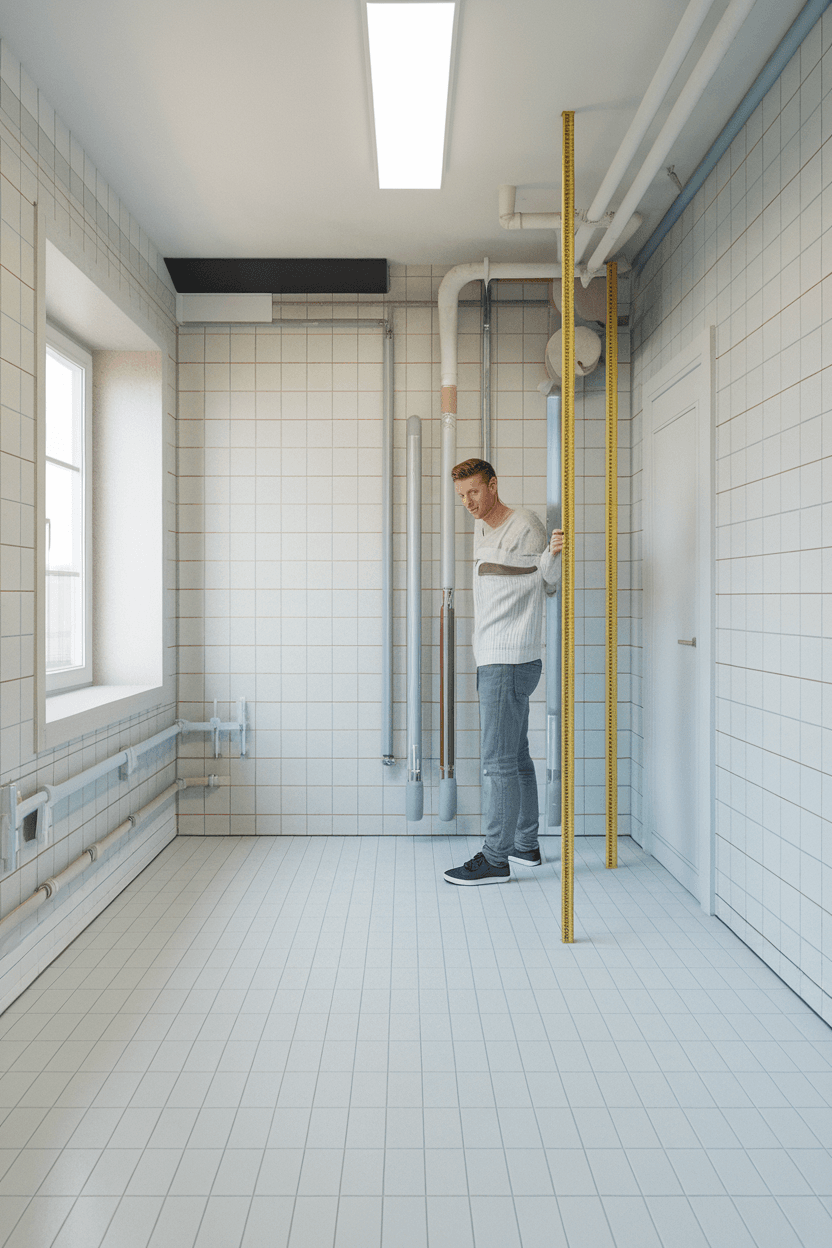
Before installing laundry room cabinets, I need to carefully measure the available space. I’ll use a measuring tape to determine the width, height, and depth of the area where I plan to add cabinets. This step is crucial for ensuring the cabinets will fit properly without crowding the room.
I’ll measure the wall space above and beside my washer and dryer, noting any obstacles like windows, doors, or pipes. It’s important to leave enough clearance around appliances for proper ventilation and access for repairs.
Vertical space is often overlooked but extremely valuable in laundry rooms. I can utilize the vertical space by installing shelves and cabinets above appliances when floor space is limited.
When planning cabinet depth, I’ll consider what items I’ll be storing. Shallower cabinets work well for smaller items, while deeper ones accommodate bulkier supplies like detergent bottles and cleaning equipment.
I’ll create a simple sketch of my laundry room with all measurements clearly marked. This will help me visualize the layout and avoid purchasing cabinets that don’t fit the space properly.
2) Consider Custom Cabinets For A Tailored Look And Optimal Use Of Space

Custom cabinets are an excellent choice when I want my laundry room to have both style and functionality. Unlike standard cabinets, custom options can be tailored to my room’s specific dimensions and shape, creating storage solutions that work perfectly in any setting. This personalization means I can make use of every inch of available space.
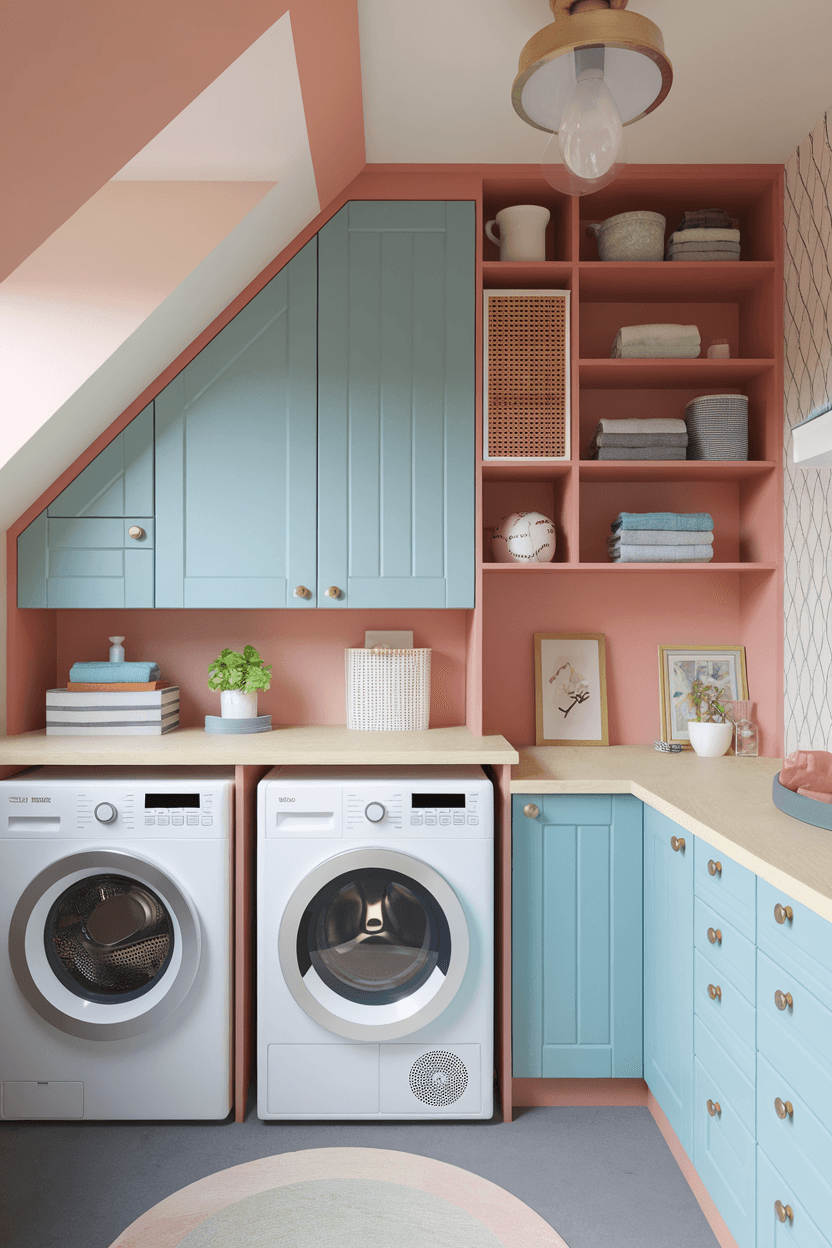
I find that custom cabinets allow me to address the unique challenges of my laundry room. Whether I’m dealing with awkward corners, sloped ceilings, or unusual room layouts, custom cabinetry can be designed to fit these spaces precisely.
Maximizing vertical space is one of the biggest advantages of going custom in the laundry room. I can extend cabinets all the way to the ceiling for additional storage or create specialized compartments for laundry supplies.
Custom cabinets also give me the freedom to incorporate both closed storage and open shelving in my design. This combination creates visual interest while keeping some items hidden and others easily accessible.
I can also choose finishes and hardware that complement the rest of my home, creating a cohesive look. This attention to detail helps transform my laundry room from a purely functional space into one that’s both practical and aesthetically pleasing.
3) Use Toggle Bolts For Secure Installation On Drywall
When installing cabinets in your laundry room, you might not always find wall studs where you need them. In this case, toggle bolts are a reliable solution for securing cabinets to drywall. These special fasteners create a strong anchor that distributes the cabinet’s weight across the drywall.
To use toggle bolts, I first need to drill a hole large enough for the folded toggle to pass through the drywall. The hole should be slightly larger than the bolt but smaller than the toggle when it’s open. I always measure carefully before drilling.
Proper installation is crucial for toggle bolts to work effectively. I remove the cabinet temporarily after marking the holes, then install the toggles through the enlarged holes. Each cabinet typically needs at least 4 toggle bolts to provide adequate support on drywall.
For extra security, I try to catch at least one stud if possible. As mentioned in some laundry room cabinet installations, a combination of toggle bolts and stud screws provides the best support.
I always add a washer to each toggle bolt to distribute the pressure more evenly. This prevents the bolt head from pulling through the cabinet material over time.
4) Opt For Cabinets With Doors To Keep The Clutter Out Of Sight
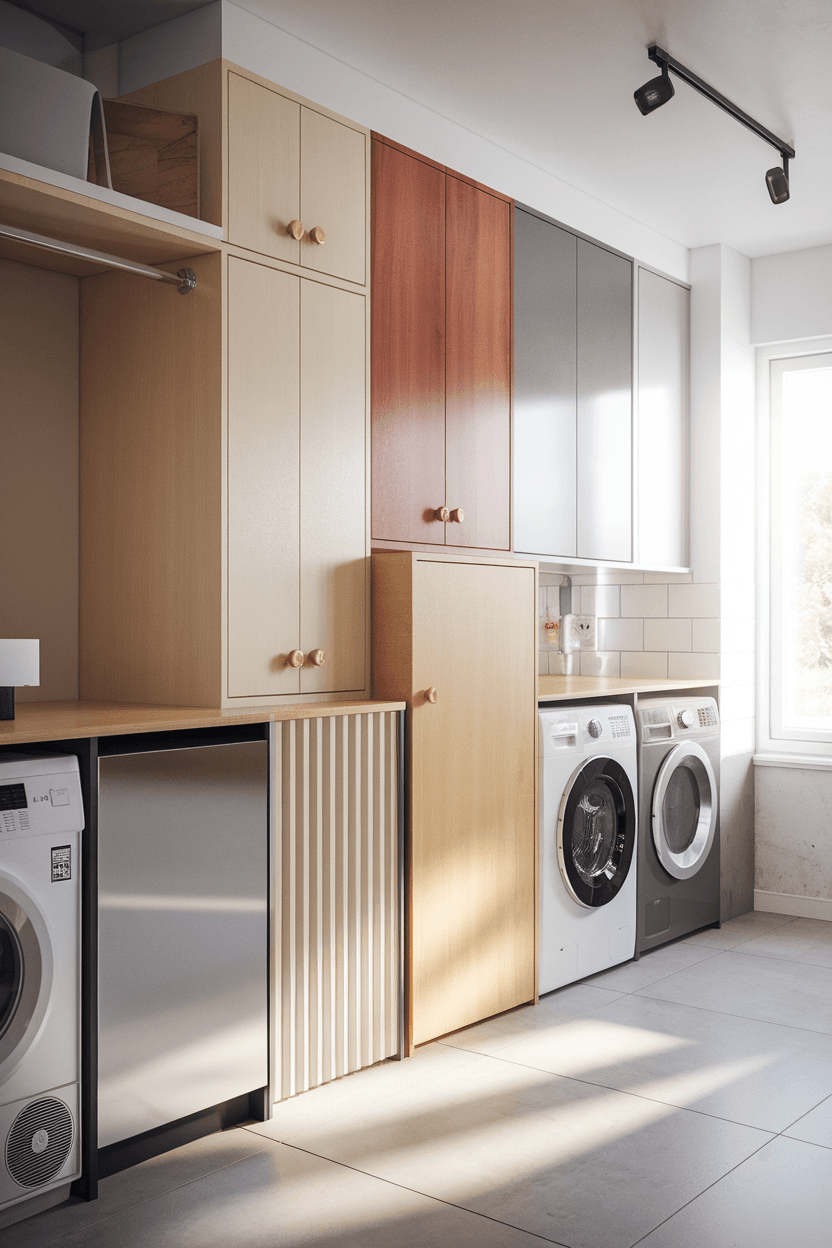
Keeping your laundry room organized can be challenging with all the supplies needed for washing, drying, and folding clothes. I recommend installing cabinets with doors to hide visual clutter and create a cleaner appearance. Closed cabinet doors are perfect for concealing detergents, fabric softeners, and other laundry essentials.
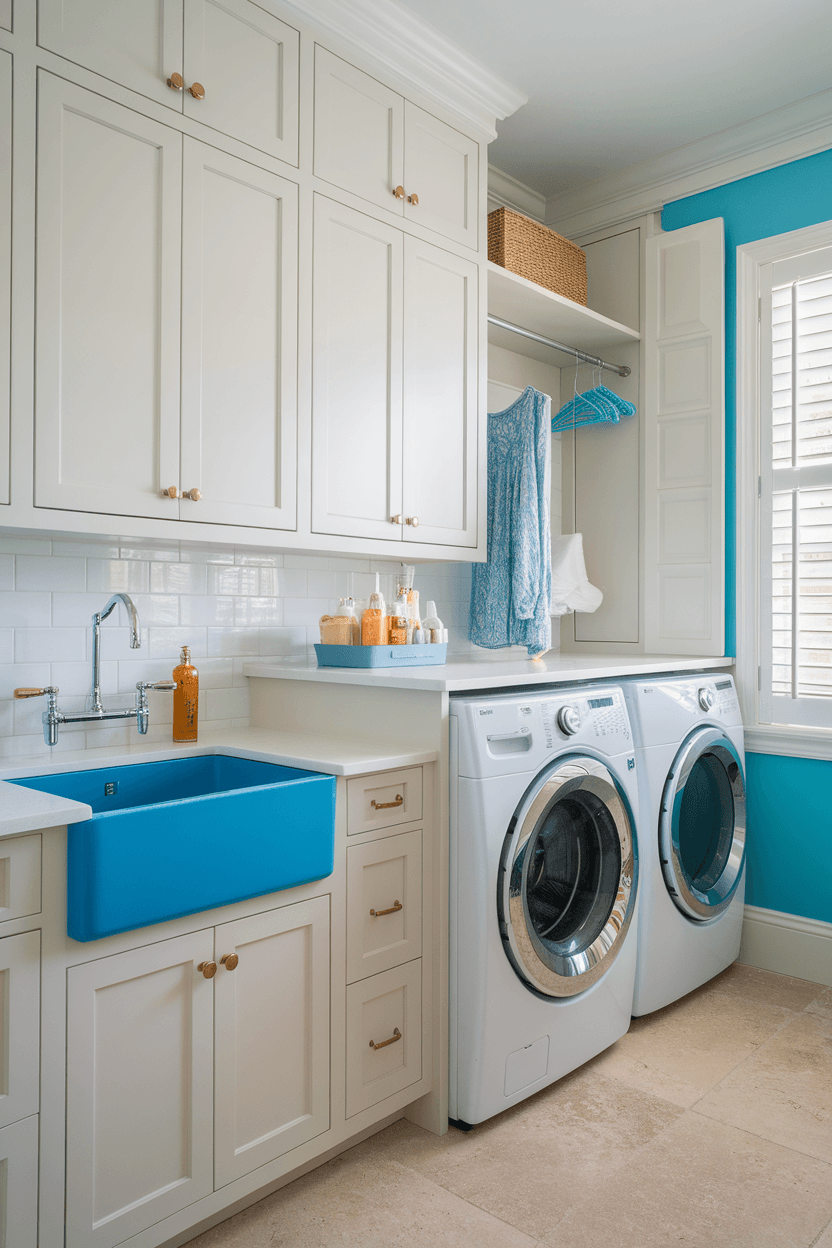
When selecting cabinets, I suggest choosing styles that complement your home’s overall design. Shaker cabinets work well in most spaces and offer a timeless look that won’t quickly go out of style.
I’ve found that upper cabinets are particularly useful for storing items you don’t use daily. These can include specialty cleaners, extra supplies, or seasonal items that don’t need to be within immediate reach.
For frequently used products, I like to dedicate a few easily accessible cabinets near the washer and dryer. This makes my laundry routine more efficient while keeping everything neatly tucked away.
Custom wall cabinets maximize vertical space, making them ideal for smaller laundry rooms where floor space is limited. I’ve seen how transformative these cabinets can be in creating a clean, organized space.
5) Select Moisture-resistant Materials Suitable For Laundry Environments

Choosing the right cabinet materials for your laundry room is crucial because of the high humidity and moisture present. I recommend considering laminate or Thermofoil cabinets since they offer excellent water resistance compared to traditional wood options. These materials not only stand up well to moisture but are also easy to clean and maintain.
For a more budget-friendly option, I find that plywood can be an excellent choice for laundry room cabinets. It offers a good balance of durability and customization possibilities while remaining cost-effective for most homeowners.
Highly Moisture Resistant (HMR) board is specifically designed for damp environments like laundry rooms. I’ve seen great results with PVC, stainless steel, and polymer materials as well, which are engineered to withstand the challenges of laundry spaces.
When selecting hardware for your cabinets, I suggest choosing rust-resistant options like stainless steel or sealed metals. This small detail can significantly extend the life of your laundry room cabinets, preventing unsightly rust spots from forming due to constant exposure to moisture.
6) Incorporate Under-cabinet Lighting For Enhanced Visibility
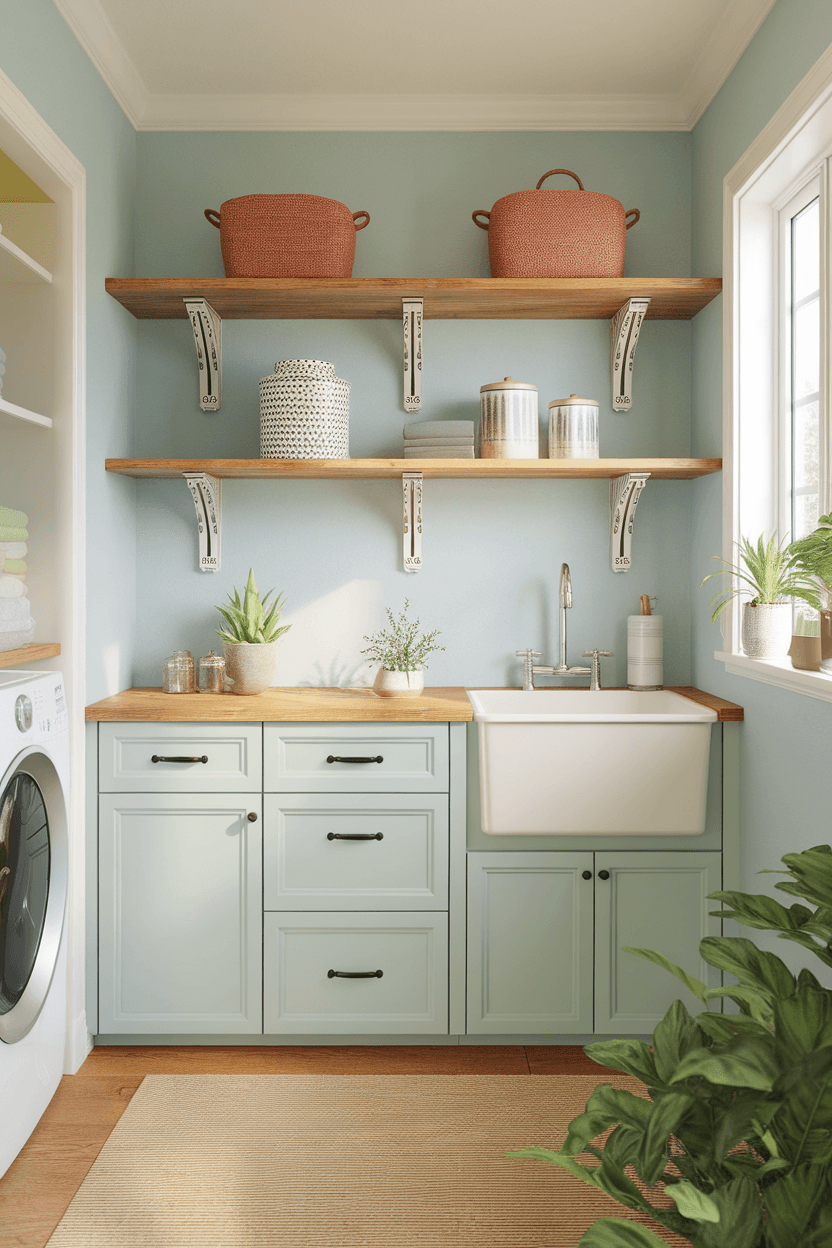
Adding lights under your laundry room cabinets can make a huge difference in how you use the space. Good lighting helps you see stains better and sort laundry more effectively. I recommend installing lights toward the front of cabinets for the best coverage of your work areas.
LED strip lighting is a popular and energy-efficient option for laundry rooms. These strips are easy to install and can brighten countertops significantly, making all your laundry tasks easier to complete. I’ve found that proper lighting reduces eye strain when I’m working on tough stains or folding clothes.
Strategic placement is key to getting the most benefit from under-cabinet lighting. Mounting lights too far back will reduce their effectiveness, so position them closer to the front edge of cabinets. I’ve noticed that under-cabinet lighting not only improves functionality but also adds a polished look to the entire room.
If you’re using smart home features, consider adding motion sensors or connecting to your existing system. Some people experience a slight delay with WiFi-connected lighting options, so test different solutions to find what works best. I believe good lighting is one of the most important components of any lighting plan for a successful laundry room.